



TL;DR: Global capital markets turn your savings into cash for growth and new opportunities.
Ever wonder if there's more to global capital markets than meets the eye? They connect investors and businesses all over the world, transforming savings into funds that drive growth and innovation. Key hubs like New York, London, Tokyo, and Hong Kong form a network that makes it easy to access fresh opportunities.
In this post, you'll learn how these markets help:
• Balance risk.
• Build solid portfolios.
• Fuel progress.
Read on to see how a deeper understanding of global capital markets can reshape your investment approach.
International Capital Markets Overview: Structures, Players, and Instruments

Global capital markets connect investors with companies across different countries. They turn savings into money for businesses and projects that need cash to grow. A network of exchanges, banks, and other financial firms makes it simple to fund innovation and development. For instance, a company might issue international bonds to gather funds for expanding its operations worldwide. This process shows how these markets help drive economic progress.
Major financial hubs like New York, London, Tokyo, and Hong Kong form the backbone of these markets. New York stands out with its busy stock exchanges. London is a leader in debt issuance and financial services. Tokyo blends strict regulations with modern technology, and Hong Kong links East Asian economies with the rest of the world. These centers let investors move money across regions easily, which boosts market liquidity and opens up more cross-border opportunities.
A range of instruments keeps capital moving around the globe. Stocks offer ownership, while bonds provide steady returns from governments and companies. Tools like futures, options, and swaps help manage risk. Exchange-traded funds, or ETFs, give a way to invest in many assets with one trade. This mix of instruments supports global capital flows by adapting to market changes and meeting the needs of today's businesses.
global capital markets: Dynamic Investment Prospects

Global capital markets give investors many tools to spur economic growth and support business expansion worldwide. These instruments help companies secure the funding they need and offer clear strategies for building strong portfolios. For example, a tech startup might begin with modest equity funding, raising early capital through local trading networks before it becomes a market leader.
Investors use a mix of tools to balance risk and return. They rely on equity networks, debt platforms, and specialized derivative products. Each tool targets income and growth opportunities, no matter where the market stands. This mix boosts liquidity and spreads exposure across different countries.
| Asset Class | Examples |
|---|---|
| Equities | Common and preferred shares |
| Fixed Income | Sovereign and corporate bonds |
| Derivatives | Futures, options, swaps |
| Commodities | Energy, metals, agriculture |
| Foreign Exchange | Spot, forward, swaps |
| ETFs | Sector and index ETFs |
Together, these instruments help ease market volatility and boost transparency across borders. They create a dynamic setting where investors can quickly react to new trends and seize opportunities. Understanding the benefits of each asset class is key to building a balanced and flexible portfolio in today’s global market.
Global Capital Markets by Region and Volume
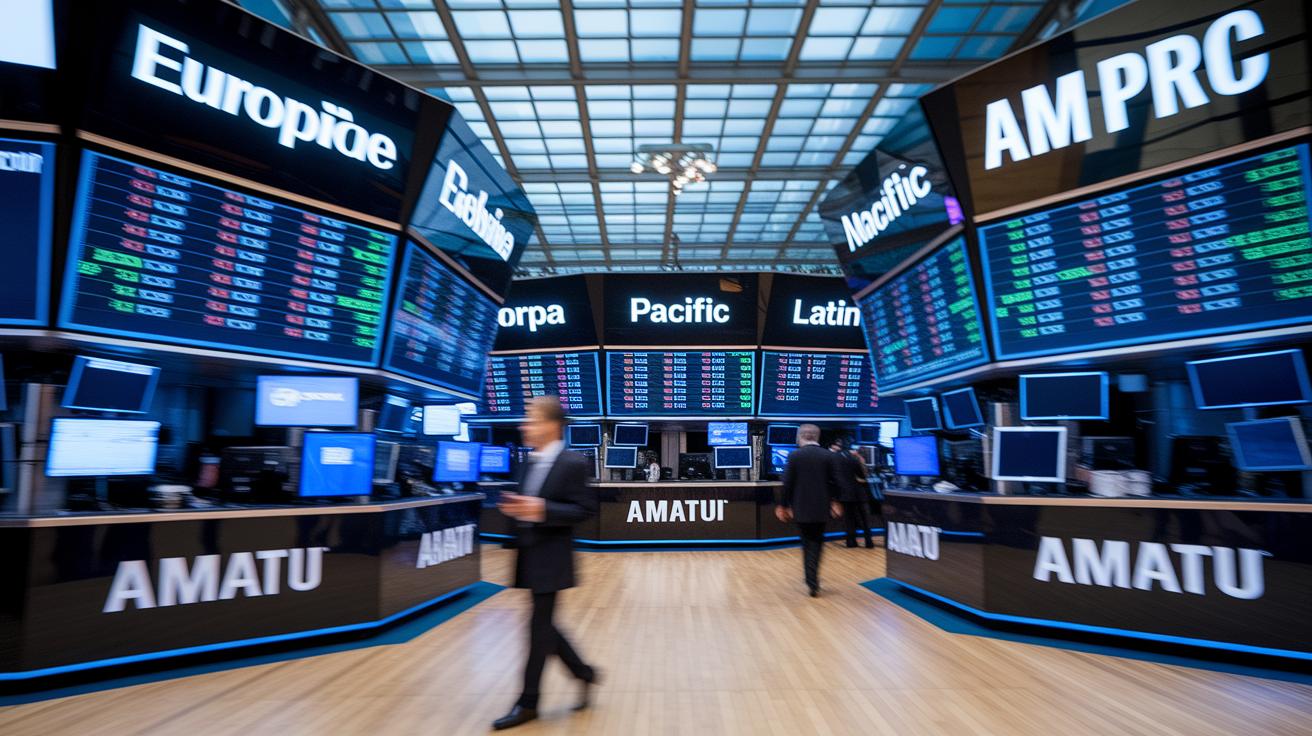
Understanding how markets differ by region helps investors spot where trading is brisk and where robust markets support strong action. Splitting global markets into North America, Europe, Asia-Pacific, and Latin America shows unique trends shaped by local rules, investor bases, and economic conditions. This insight helps you decide if you want deep liquidity or emerging opportunities. For instance, traders in North America enjoy high-volume exchanges, while Asia-Pacific offers quick trades thanks to rising investor activity.
| Region | Market Cap (USD Trillions) | Major Exchanges |
|---|---|---|
| North America | 30 | NYSE, NASDAQ |
| Europe | 20 | LSE, Euronext |
| Asia-Pacific | 25 | Tokyo Stock Exchange, Hong Kong Stock Exchange |
| Latin America | 5 | Bovespa, BM&F Bovespa |
Looking at market cap numbers reveals clear contrasts across regions. North America leads with mature platforms that offer deep liquidity and wide investor interest. Europe mixes old-school institutions with newer exchanges to create steady choices. Asia-Pacific is rapidly growing, driven by tech advances and more active investors. Meanwhile, Latin America, though smaller, may offer high-yield opportunities as its markets evolve. These details can help you adjust your portfolio based on local trading dynamics and risk.
Cross-Border Investment Flows in Global Capital Markets

Governments and international agreements shape how money moves between countries. Updated rules and treaties help protect investors and make markets fair. For example, countries that sign new investment treaties often see faster fund transfers and fewer delays. This stability makes it easier for investors to navigate global markets.
One big factor in moving money is the difference in interest rates across countries. Investors chase higher yields to earn more on their money. If U.S. government bonds offer a better yield than similar European options, investors may move their funds to take advantage of those returns. This shows how local economic conditions drive where capital goes.
Other factors, like political risks and changes in currency values, add more challenges. Changes in government policies or sudden shifts in currency strength can suddenly make one market less attractive. Watching these changes helps investors adjust their plans and seize new opportunities as they arise.
Risk and Regulation in Global Capital Markets

Since 2008, regulators have tightened the rules to cut risk in global markets. Key laws such as Basel III, Dodd-Frank, and MiFID II now force banks to hold more cash and liquid assets. For example, Basel III requires banks to run with larger capital buffers so they are better prepared when the market turns sour.
Banks and financial firms now focus on building strong liquidity reserves. By keeping extra cash on hand, they can manage unexpected losses without slowing down their operations. Many banks have upped their cash reserves to guard against sudden shocks. This approach helps them weather economic surprises while keeping investor trust intact.
Companies working across borders face the challenge of juggling different reporting standards. They must satisfy both local and global rules to fully protect investors. In practice, this means aligning financial reports to meet the needs of local regulators and international standards, ensuring clear risk assessments and smooth cross-border deals.
Technological Innovations Shaping Global Capital Markets

Electronic trading platforms have changed global markets by speeding up trades and cutting costs. Firms now use pre-set, automated rules to execute trades, which helps boost accuracy and minimize mistakes. High-frequency trading platforms, for example, can place thousands of orders in just a few seconds to take advantage of tiny price shifts, sometimes executing over 10,000 trades in a single second, a pace no human trader could match.
Advanced tools like artificial intelligence (tech that learns and adapts), machine learning (systems that improve through data), blockchain (a secure, transparent recordkeeping method), and digital asset trading are further driving market efficiency. Analytics now forecast market trends with greater precision, while machine learning models use past trade data to sharpen their predictions. Meanwhile, blockchain supports clear and secure settlements and digital asset platforms open new ways to invest in cryptocurrencies and tokenized securities. These combined innovations are reshaping market dynamics, boosting transaction speeds, and increasing transparency.
Emerging Opportunities and Trends in Global Capital Markets

Investors are looking for new growth by moving funds into emerging economies. Many are shifting assets toward markets in Asia, Latin America, and Africa, where funds are growing faster than in mature regions. Higher return potential and strong local demographics are key drivers. This trend shows that investors are ready to take on more risk by exploring innovative businesses outside the usual power centers.
ETFs are changing how investors tap into global assets. These passive, index-based funds keep costs low and offer wide diversification. Lately, specialized ETFs have emerged focusing on sectors like technology and green energy. This mix of traditional and forward-thinking strategies makes investing in emerging areas simpler and minimizes the need for active management.
Investors are also expanding their reach with alternative asset classes beyond stocks and bonds. Markets for private credit, infrastructure finance, and alternative lending have grown as investors seek higher yields and steady cash flows. For example, private deals in renewable energy projects and local infrastructure plans are gaining traction. These alternatives not only diversify portfolios but also help cushion against market volatility.
Future Outlook for Global Capital Markets

Central banks are fine-tuning their rate paths and easing measures. This means rate hikes could make borrowing more expensive and encourage a shift from bonds to stocks, while easing may add extra cash into the market and push investors toward higher-risk assets. Even small tweaks in rates have led to noticeable changes in portfolios in the past.
Regulation, new technology, and global events are also set to reshape the market. Policymakers might update rules to keep pace with digital trading and better risk checks. As tools like blockchain (digital record-keeping) and automated trading speed up transactions, expect new guidelines to emerge. Meanwhile, trade talks and political shifts could boost uncertainty, so it pays to keep your risk management in check.
Final Words
In the action, we explored how global capital markets function by breaking down their structures, players, and key instruments. We examined financial hubs, regional dynamics, cross-border investment flows, and the evolving role of technology and regulation. This clear breakdown helps connect the dots from risk management and emerging opportunities to the future outlook. Keep these insights in your tool kit to make timely, knowledgeable decisions and seize market moments with renewed confidence.
FAQ
What are global capital markets?
Global capital markets refer to systems where funds are allocated worldwide through instruments like equities, bonds, derivatives, and ETFs, connecting financial hubs such as New York, London, Tokyo, and Hong Kong.
What key instruments are traded in these markets?
Key instruments include equities (common and preferred shares), fixed income (sovereign and corporate bonds), derivatives (futures, options, swaps), commodities, foreign exchange, and ETFs that facilitate broad investment access.
How are global capital markets segmented by region and volume?
Global capital markets are segmented by regions like North America, Europe, Asia-Pacific, and Latin America, where variations in market size and liquidity affect trading venues and overall market cap.
What factors drive cross-border investment flows?
Cross-border investment flows are driven by regulatory frameworks, bilateral treaties, interest rate differentials, political risks, currency fluctuations, and macroeconomic factors affecting global capital movements.
How do risk and regulation shape global capital markets?
Risk and regulation in global capital markets are guided by reforms like Basel III, Dodd-Frank, and MiFID II, with banks using liquidity buffers and capital ratios to manage risks and ensure compliance.
How is technology impacting global capital market operations?
Technology improves market efficiency through electronic trading, algorithmic strategies, high-frequency platforms, and innovations such as AI, machine learning, blockchain for settlement, and digital asset trading.
What emerging opportunities are present in global capital markets?
Emerging opportunities include increased allocations to emerging economy investments, ETF growth boosting passive index strategies, and private credit and infrastructure finance offering alternative lending options.
What is the future outlook for global capital markets?
The future outlook likely involves adjustments in interest rate paths, shifts in regulation, greater technology adoption, and changes in geopolitical risk, all influencing market volatility and economic cycles.