


TL;DR: Understand your cost of capital to guide smart investment choices.
Cost of capital is the mix of loan interest and investor returns. It tells companies which projects might be too risky and which ones are worth the leap. Even a small shift in this rate can change a company’s strategy and competitiveness. When you know your cost of capital well, you can make decisions that drive growth and build value, even in tough markets.
Cost of Capital Explained: Definition, Significance, and Strategic Influence
Cost of capital is the average rate a company pays to finance its operations. It mixes the cost of debt (money from loans) with the return investors expect from equity. Companies use this rate as a benchmark to decide if a project is worth the risk. If a project earns less than this cost, it might not be a smart move.
Companies keep a close eye on their cost of capital because even small changes can impact their overall competitiveness. When large corporations manage trillions of dollars, tiny shifts in this rate can change investment choices and strategy. Executives use cost of capital to set return targets and decide where to invest, influencing both economic recovery and job creation.
Long-term, cost of capital helps shape strategic planning and financial strength. By allocating funds that earn more than the borrowing cost, businesses build a solid foundation for growth. This rate guides investment decisions and clarifies the risk-return tradeoff. A well-managed cost of capital positions a company to face market challenges and boost performance.
Breaking Down Cost of Capital: Debt and Equity Components
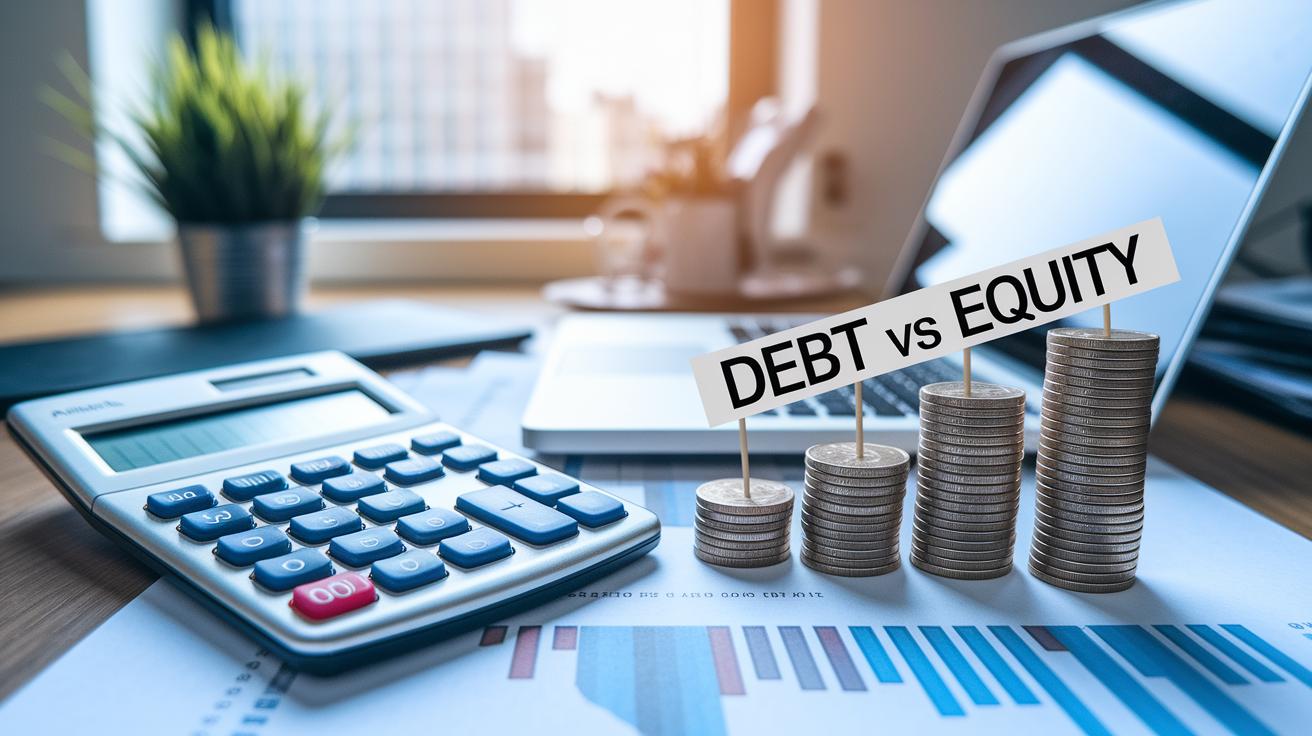
The cost of capital has two parts: debt and equity. Debt is the money a company borrows, and its cost is the interest paid. Since interest is tax-deductible, companies pay less once taxes are factored in. Equity is the return investors expect for taking on extra risk. Firms mix these costs using the weighted average cost of capital to set investment limits, shape strategy, and manage funding expenses.
Cost of Debt
Debt cost starts with the interest rate a firm pays on its loans. To get the real cost, you lower the rate by the tax benefit. For example, if a company pays 5% interest and has a 20% tax rate, the true cost is 5% x (1 – 0.20) = 4%. This tax-adjusted rate makes it easier to compare different borrowing options.
Cost of Equity
Cost of equity shows the return investors need to risk their money. Most often, analysts use the Capital Asset Pricing Model (CAPM) to figure this out. CAPM mixes a risk-free rate (the return on safe investments), a beta factor (which measures stock volatility), and a market risk premium. For instance, with a 2% risk-free rate, a beta of 1.1, and a 5% market premium, the cost of equity comes to about 7.5%.
Calculating WACC: Step-by-Step Computation Techniques
WACC stands for Weighted Average Cost of Capital. In plain language, it tells you the average cost a company pays for borrowing money (debt) and attracting investors (equity). You calculate it with this formula:
WACC = (wd × rd × (1 – T)) + (we × re)
Here:
• wd is the debt weight.
• rd is the cost of borrowing.
• T is the tax rate.
• we is the equity weight.
• re is the cost of equity.
When you mix these numbers, you get one rate that acts as a discount rate for future cash flows. This rate helps decide whether a project is worth investing in.
The table below breaks down each part with a practical example:
| Component | Weight | Rate | After-Tax Rate | Contribution to WACC |
|---|---|---|---|---|
| Debt | 60% | 5% | 4% (5% x (1-0.20)) | 2.4% (0.60 x 4%) |
| Equity | 40% | 8% | 8% | 3.2% (0.40 x 8%) |
| Total (WACC) | – | – | – | 5.6% (2.4% + 3.2%) |
In this example, the company finances 60% of its operations with debt and 40% with equity. The cost of debt is 5% and the cost of equity is 8%. Because interest on debt is tax-deductible, the effective rate for debt drops to 4% with a 20% tax rate. Multiply each rate by its respective weight and add them together to get a WACC of 5.6%. This rate is used to discount future cash flows, meaning that only projects yielding above 5.6% can create real value for shareholders.
Cost of Capital Fuels Sound Financial Decisions

TL;DR: Use the cost of capital to decide if an investment is worth the risk by comparing its future cash flows to today’s dollars.
Cost of capital is the discount rate that turns future cash flow estimates into today’s value. It sets a minimum return threshold. If a project’s cash flows beat this rate, it likely creates value.
This approach underpins key methods like net present value (NPV) and internal rate of return (IRR) analyses. It helps companies match projects with their required return on investment, steering decisions toward those that boost shareholder value.
Here’s how to use cost of capital in your budgeting:
- Estimate future free cash flows. Look at past data and trends to forecast the cash a project may generate.
- Select the right cost of capital. Choose a rate that matches your mix of debt and equity and fits your risk profile.
- Discount future cash flows to present value. Apply your chosen rate to find the true current value of future returns.
- Compare the results to your required return thresholds. If the NPV or IRR meets or exceeds your benchmarks, the project is likely a good investment.
Following this clear process turns complex financial projections into actionable decisions. It ensures that investments aren’t just superficially attractive but meet rigorous risk-adjusted return criteria.
Optimizing Cost of Capital: Key Drivers and Best Practices
Market interest rates and risk premiums set the stage for your cost of capital. These factors affect how much you pay to borrow money and shape what investors expect. On top of that, a company’s credit rating and debt levels change how investors see its risks and returns.
Getting the mix of debt and equity right is key. A strong credit rating can lower borrowing costs, and balancing your funding sources keeps returns steady. This approach lowers the overall cost of capital and supports growth plans.
To keep funding costs low, try these steps:
• Check your debt levels based on current market conditions and your own risk.
• Look for better loan terms to cut borrowing expenses.
• Use a variety of funding sources to spread risk.
• Keep an eye on market trends and adjust your strategy as needed.
Using these steps consistently helps you stay competitive and make smart decisions that balance risk with potential gains.
Final Words
We covered key ideas from defining and breaking down cost of capital to computing WACC and using it in investment appraisal. Small steps like assessing debt and equity levels, calculating after-tax rates, and setting proper investment hurdles can make a big difference.
Each tactic empowers you to make smart, timely decisions. Keep these actionable steps in mind as you plan your moves and optimize your funding strategy. Stay sharp and confident as you work with cost of capital to drive your investment success.
FAQ
What is meant by cost of capital?
The cost of capital means the return a firm must earn on its investments to maintain its value and attract funding. It represents the required rate of return for lenders and investors.
How do I calculate the cost of capital and what is its formula?
The cost of capital is calculated using the WACC formula: WACC = (wd × rd × (1 – T)) + (we × re). It blends the cost of debt and equity based on their weights in the capital structure.
What does 12% WACC mean?
A 12% WACC means that the company’s average cost of financing is 12% per year. Investments must earn above this rate to add value and justify the capital costs.
What are the main components of cost of capital?
The main components are the cost of debt—which is the after-tax borrowing cost—and the cost of equity, which is the return investors expect. These combine to form the overall weighted average cost of capital.
What is the cost of capital in economics?
In economics, the cost of capital is the benchmark rate used to evaluate investment opportunities. It reflects opportunity costs and influences decisions that can affect broader economic activity.
What is meant by specific cost of capital?
Specific cost of capital refers to the return requirement unique to a particular firm or project. It factors in the firm’s risk profile and market conditions, guiding investment decisions.
What symbol represents the cost of capital?
The cost of capital is often denoted by symbols such as “r” or “Ke” for equity cost. The symbol may vary, but it consistently represents the required rate of return.
Where can I find cost of capital examples, solutions, and a ppt?
You can explore various cost of capital examples and solutions in financial presentations and online resources. These provide step-by-step computations and real-world scenarios to aid understanding.