



TL;DR: Discover whether quick day trades or steadier swing trades best match your style.
Are you moving fast enough in the market or missing out on gains? Some traders believe day trading delivers rapid wins, while others find swing trading more rewarding over time. In this post, we explain both methods in plain language. We compare holding trades overnight with making quick moves during the day. Whether you like to watch the market closely or set a plan and step away, knowing these strategies can help you trade smarter today.
swing trading vs day trading: Smart Market Moves

TL;DR: Swing trading holds positions overnight to weeks for bigger gains, while day trading focuses on many quick trades for small profits.
Swing trading means holding a trade from one day through several weeks, aiming for a larger move. Traders using this method lean on long-term charts and trend signals to set their entry and exit points. For example, you might pick a stock on a clear upward trend and hold through a small pullback to snag an extra 5% profit. This strategy suits those who don’t have time for constant monitoring and can handle overnight risks.
Day trading, in contrast, involves opening and closing positions within the same day, often within 10 minutes to 3 hours. Day traders use intraday charts and rapid indicators to profit from quick, small moves. Imagine catching a brief volume spike to earn around a 0.5% return before the day ends.
| Aspect | Swing Trading | Day Trading |
|---|---|---|
| Time Horizon | Overnight to several weeks/months | Intraday (minutes to hours) |
| Holding Period | Longer exposure | Quick entries and exits |
| Profit Frequency | Fewer, larger gains | Frequent, smaller gains |
| Time Commitment | Flexible monitoring | Requires full-day active trading |
Time commitment and capital requirements in swing trading vs day trading

TL;DR: Swing trading suits busy schedules with lower capital needs, while day trading demands full-time attention and a higher minimum balance.
Day trading means you are watching the market all trading hours. You have to act fast when prices shift or news drops, making it almost a full-time focus. Swing trading, on the other hand, lets you hold positions from several days to weeks. This style works well if you want to mix trading with other daily duties.
Keep in mind that stock day traders must meet strict capital rules, like having at least $25,000 to follow the pattern day trading rule. Swing trading needs less money upfront, making it a strong option for new or part-time traders. Futures trading can lower margin requirements for both styles, opening up more opportunities based on your funds.
Plan your approach by matching your available time and money. If you’re short on market time, swing trading may be best. If you can focus all day and meet the higher capital demands, day trading might work for you.
Technical analysis and market timing in swing trading vs day trading

Swing traders look at daily and weekly charts to catch long-term trends. They use tools like moving averages and trendlines to gauge market direction. For example, a moving average crossover might signal a good entry point, especially when confirmed by indicators such as breakouts or pullbacks. In simple terms, swing traders smooth out short-term market noise to focus on clear, lasting moves.
Day traders, on the other hand, rely on quick, intraday charts like 5-minute and 15-minute intervals. They use advanced software to react fast to every tick in the market. Indicators such as VWAP, RSI (Relative Strength Index), and MACD (Moving Average Convergence Divergence) guide their entry and exit decisions. A day trader might spot a quick drop, buy in, then sell after a rebound, all within the same day. This style demands constant attention to capture each small profit while managing fast moves.
Swing trading chart indicators
- 50-day moving average
- Trendlines
- RSI
- MACD
- Breakout signals
Day trading intraday indicators
- VWAP
- 5-min moving average
- Bollinger Bands
- Level II data
- Momentum oscillators
Risk management and profit approaches in swing trading vs day trading

Day trading means making quick trades to capture small price moves. It requires constant attention as prices can change in minutes, which may lead to fast losses if you’re not careful.
Swing trading holds positions for several days, exposing you to price gaps overnight or over the weekend. These gaps can increase losses or add extra profit with unexpected market moves. It’s like riding a roller coaster that never stops, ups and downs don't just happen during market hours.
Profit targets also differ. Day traders aim for small returns many times during the day, often looking for about a 0.5% gain per trade. In contrast, swing traders wait for bigger moves over days, sometimes targeting a 5% return.
Both trading styles need strict risk controls. Stop-loss orders (automatic orders to sell and prevent further losses) are essential. They help protect your capital whether you’re trading during fast market moves or holding positions overnight. Setting exit points ahead of time and sticking to your plan keeps you on track for your profit goals.
Trade management techniques in swing trading vs day trading
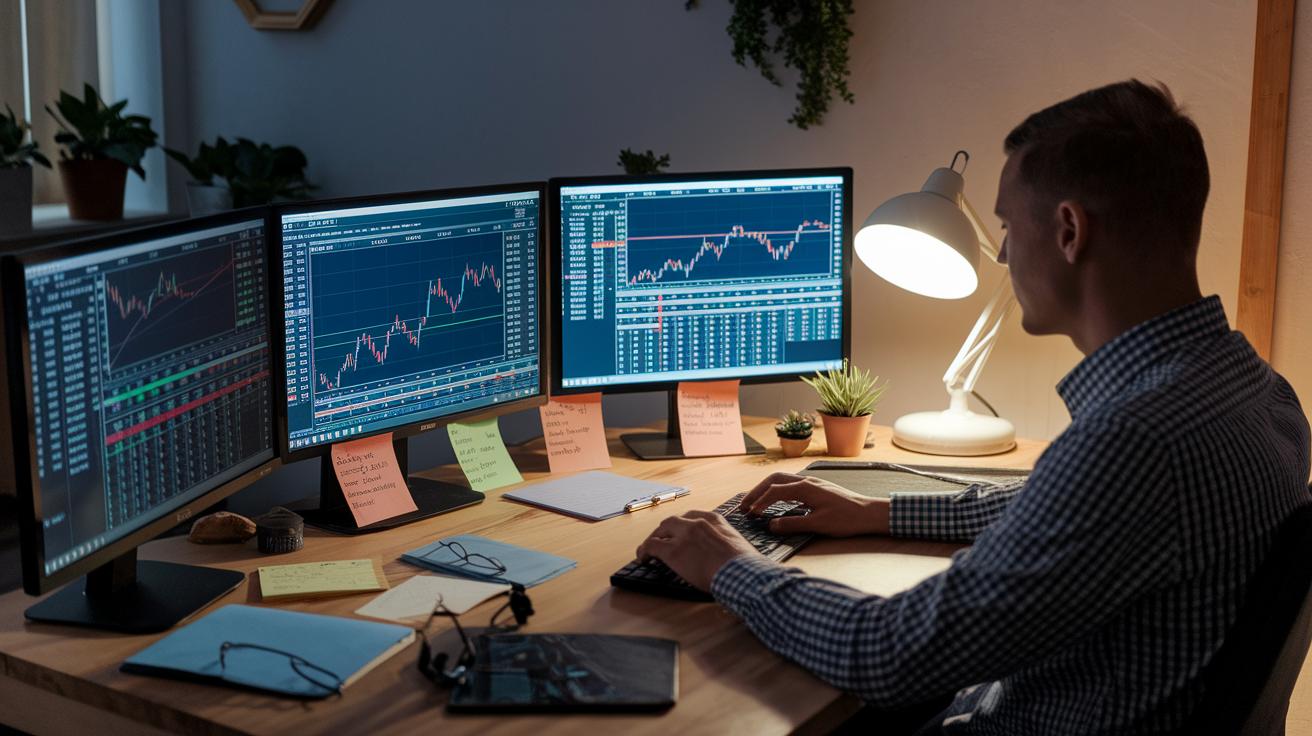
Managing swing trade positions
TL;DR: Swing trading means planning ahead, using clear stops, and setting profit targets for trades held over several days.
Swing traders follow a set plan. They choose the size of their trade and set a stop-loss order at a specific percentage below the entry price to protect against overnight or weekend gaps. This method reduces risk while allowing for larger gains over days or weeks. Patience is key here. By waiting for clear changes in market trends and sticking to preset rules, traders keep risk low and aim for consistent results.
Managing day trade positions
TL;DR: Day trading focuses on quick moves, tight stop-loss orders, and fast decisions to capture small profits.
Day traders need a different approach. They make rapid decisions and execute trades quickly. Tight stop-loss orders help lock in small gains and guard against sudden price reversals. This fast-paced method requires constant focus on live market data and careful trade sizing so that one loss doesn't have too much impact. With clear plans and swift action, day traders capture many small wins while keeping their risk in check.
Choosing between swing trading vs day trading based on personal goals

TL;DR: Choose a trading style that fits your natural pace and stress comfort level.
Start by checking in with yourself. Do you handle rapid market shifts well, or do you prefer taking time to mull over decisions? For instance, one trader found that blending quick moves with careful planning made his results more steady. If fast decisions leave you feeling tense, opt for a more measured approach.
If you’re just getting started, swing trading might be your best bet. Its slower rhythm lets you build skills gradually and keeps emotional stress in check. Ask yourself if you’re comfortable holding positions overnight and if a slower pace matches your goal for steady growth.
On the other hand, day trading is for those who thrive on speed and can keep cool under pressure. Try a simulated trading account to see how well you react in fast-paced scenarios. One trader shared that simulated practice helped him align his quick reactions with his risk tolerance, ensuring that his trading style matched his personality.
Real-world case studies of swing trading vs day trading

In a day trade setup, a trader watches for a quick dip in XYZ stock and jumps in at $50, expecting a fast bounce back. They rely on live Level II data (real-time market depth) and short-term signals to set a very tight stop-loss that cuts losses if the price falls quickly. Within 15 minutes, the price hits $50.50 and the trader exits with a small but frequent gain. Before entering, they run a swift technical check to confirm the bounce, ensuring every move is backed by clear signals and solid risk control.
Swing trading takes a slower, steadier approach. In one case, a trader buys the ABC ETF at $100 after spotting a trend reversal on daily charts, with moving averages and trendlines supporting the call. They set a stop-loss at $98 to protect against overnight price swings. Over the next two weeks, the ETF climbs to $110, yielding a larger profit from a well-timed entry. This method shows that following clear entry rules and strict risk management can pay off over time. It also suggests that it’s wise to master one trading style before blending different approaches, keeping separate funds to shield against style-specific risks.
Final Words
In the action, we broke down the core differences between swing trading and day trading. We looked at time commitment, capital needs, technical setups, and risk management along with real-world examples.
Each style offers its own set of benefits and challenges for capturing market moves. Our review helps you weigh the pros and cons when choosing your next move in swing trading vs day trading.
Stay focused and positive as you fine-tune your approach to market opportunities.
FAQ
Q: Swing trading vs day trading reddit
A: The Reddit discussions on swing trading vs day trading highlight how traders compare holding periods, risk management, and profit targets. These community insights offer real-world opinions on which style fits different trading goals.
Q: Swing trading vs day trading: which is more profitable
A: The question about profitability shows that profit potential varies; day trading seeks frequent small gains while swing trading targets larger moves. Profitability depends on market conditions, trader skill, and risk tolerance.
Q: Swing trading vs day trading vs scalping
A: The comparison of swing trading, day trading, and scalping reveals distinct strategies: scalping uses very short-term trades, day trading closes trades within a day, and swing trading holds positions longer to capture broader moves.
Q: Swing trading vs day trading pdf
A: The reference to a Swing trading vs day trading PDF indicates a downloadable guide that details key differences, strategies, and charts. It offers traders a structured overview to help choose a style that suits their needs.
Q: Swing trading vs day trading pros and cons
A: The discussion of swing trading vs day trading pros and cons shows that swing trading offers less daily stress and flexible timing, while day trading provides multiple quick opportunities, though it demands constant market monitoring and faster decisions.
Q: Swing trading vs day trading forex
A: The question about forex trading styles explains that in the forex market, swing trading captures longer-term currency moves, while day trading capitalizes on intraday volatility, with each approach using different tools and strategies for optimal execution.
Q: Swing trading vs day trading for beginners
A: The inquiry about beginners choosing between swing trading and day trading indicates that beginners often lean toward swing trading because it involves fewer trades, more time for decisions, and typically requires less capital than day trading.
Q: Swing trading vs position trading
A: The comparison between swing trading and position trading shows that swing trading holds positions for days or weeks seeking short-term moves, whereas position trading involves longer-term trends, often holding positions for months or years to capture major market shifts.
Q: Is swing trading better than day trading?
A: The question about whether swing trading is better than day trading explains that the answer depends on personal style, time commitment, and risk tolerance, as each trading method offers distinct benefits suited to different trading preferences.
Q: What is the 2% rule in swing trading?
A: The query on the 2% rule in swing trading indicates that it advises traders to risk no more than 2% of their capital on a single trade, promoting disciplined risk management and preventing large losses.
Q: What is the downside of swing trading?
A: The question on swing trading’s downside highlights that holding positions overnight may expose traders to market gaps and unexpected moves, which can lead to larger drawdowns compared to trades closed within the day.
Q: Should a beginner do swing trading?
A: The question about whether a beginner should do swing trading suggests that beginners may benefit from its lower intensity and fewer trades, allowing extra time for decision-making and lower capital requirements compared to day trading.