



TL;DR: Use STEEPLE analysis to uncover hidden trends that guide smarter business strategies.
Hidden forces can shape your company’s future. STEEPLE analysis breaks down factors like social habits, tech trends, economic shifts, environmental challenges, political moves, legal rules, and ethical values. This tool helps you understand the market pulse and turn subtle signals into clear, actionable strategies. By examining these seven areas, you can spot new opportunities and identify risks early on, leading to smarter business decisions and stronger growth.
Defining the STEEPLE Analysis Framework
TL;DR: Use STEEPLE Analysis to spot outside factors, social, tech, economic, environmental, political, legal, and ethical, that shape your market and strategy.
Steeple Analysis is a tool that looks at forces outside a company’s control. It helps you pinpoint opportunities and threats so you can plan smart strategies. This method gives you a big-picture view of what drives market trends and shapes competition.
It breaks down into seven clear areas:
- Social: Look at cultural trends, demographic changes, and how people act. For example, shifts in lifestyle can boost demand for healthier products.
- Technological: Check out new tech and digital innovations that give a competitive edge, like artificial intelligence changing how industries work.
- Economic: Review short- and long-term conditions such as inflation and job trends. Knowing these details helps you plan for growth and manage market risks.
- Environmental: Study climate trends, weather patterns, and sustainability challenges. Good conditions can open new sales channels, while bad weather can raise costs.
- Political: Consider government policies, political stability, and new regulations. Changes here might influence how consumers spend money.
- Legal: Understand the laws and regulations, like data rules or labor standards, that your business must follow to stay compliant.
- Ethical: This unique part highlights core moral values and reputation. Keeping practices fair builds trust with customers and stakeholders.
This approach offers a clear way to assess the broader market. By understanding each factor, decision-makers can identify key areas to drive sustainable growth.
Steeple Analysis: Bright Strategy for Growth

Social Factors
Changing consumer habits and cultural differences shape how markets move. More people now seek wellness and sustainability, pushing companies to update their products and marketing. For instance, organic food used to be a niche market; today over 50% of consumers choose healthy options. This shift means businesses must tweak their strategies to keep up with social trends.
Technological Factors
Technology opens new global opportunities and gives companies a key edge. Tools like artificial intelligence (tech that mimics human decision-making) and cloud computing help firms manage operations more efficiently and reach wider audiences. Picture a retailer using AI to manage its stock, cutting downtime and boosting profits. These innovations not only streamline work but also change how customers interact with brands.
Economic Factors
Understanding both short-term and long-term economic conditions is essential for growth and international expansion. Changes in interest rates, inflation, or currency values can signal when to push forward or hold back. For example, a company might delay launching abroad until economic indicators show steady growth, balancing current pressures with future prospects.
Environmental Factors
Weather and climate trends directly affect business operations. Good weather can boost sales during certain seasons, while disasters might raise costs unexpectedly. Companies need to plan for climate change. A retailer, for example, might adjust its supply chain in advance of severe weather to protect its revenue during tough times.
Political Factors
Government policies and political climates play a big role in shaping business decisions. Shifts in trade regulations or political instability can prompt companies to rethink their market strategies, aiming to reduce risks and tap into new opportunities.
Legal Factors
Staying on top of legal requirements, like those under GDPR (a European data protection law), is crucial for any business. Regular checks and updates to operations help protect customer trust and avoid expensive penalties.
Ethical Factors
Ethical practices, such as ensuring fair pay and responsible sourcing, strengthen a company’s reputation. Businesses that stay true to their values build lasting customer loyalty and benefit from positive public sentiment.
Conducting a STEEPLE Analysis: Step-by-Step Guide
TL;DR: Follow these seven steps to turn external factors into clear, actionable steps.
-
Define your goal.
Decide which external factors matter most and what you want to learn. -
Collect trusted data.
Use market reports and expert insights to get a real picture of current trends. -
Keep one record.
Write everything down in one master document so you can easily review later. -
Work as a team.
Bring in different departments to add fresh views to your review. -
Check out competitors.
See how rivals handle similar issues for useful clues and benchmarks. -
Score your findings.
Assign simple scores to opportunities and threats to see which ones matter most. -
Set clear next steps.
Turn your insights into specific tasks to boost your strategy.
These seven steps help you break down complex external data into simple tasks. Use this clear framework to keep your company agile and ready for change.
Key Benefits of Using STEEPLE Analysis
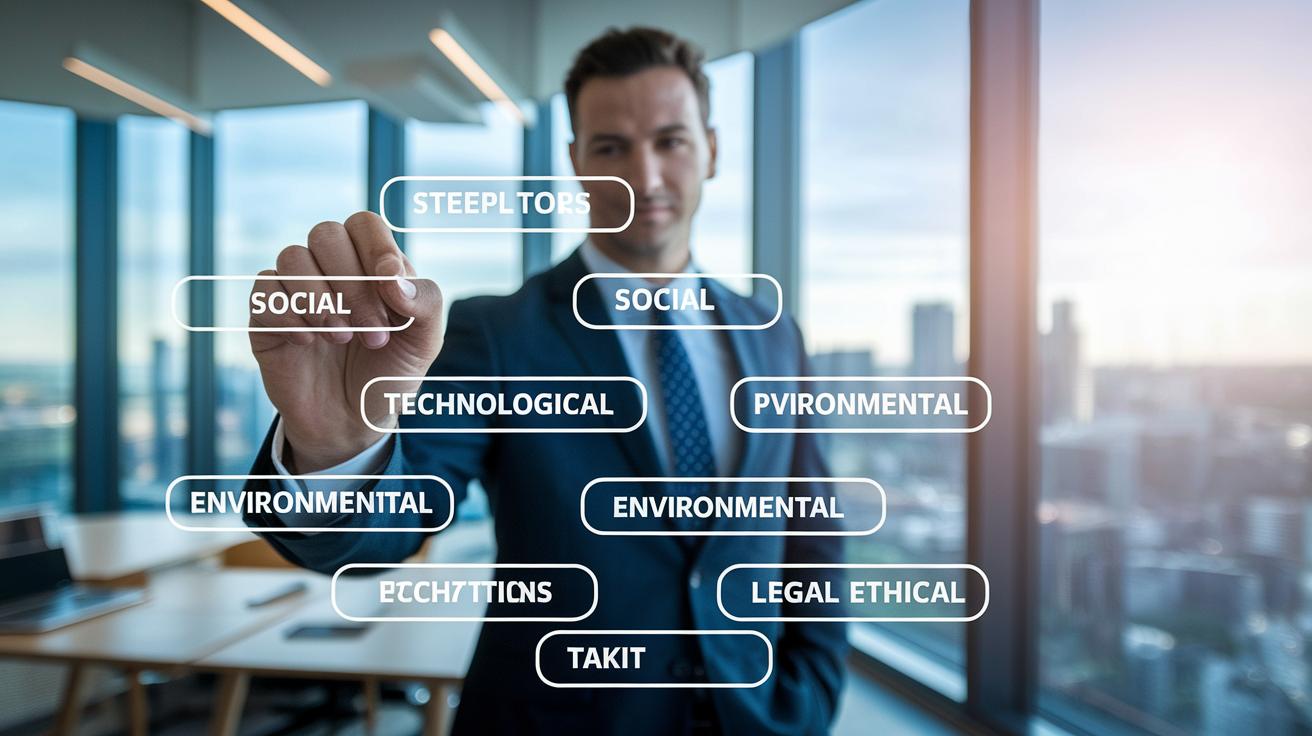
Using STEEPLE analysis helps you spot risks early. It breaks out big trends you might miss, like changes in consumer habits or new laws. STEEPLE looks at Social, Technological, Economic, Environmental, Political, Legal, and Ethical factors. This clear, step-by-step method makes it easier to plan with confidence.
It also drives smarter decisions. By reviewing your environment in detail, you can map out strategies that fit real market conditions. This scan highlights opportunities for growth and warns you of risks that need quick action. Regular use of STEEPLE keeps your plans flexible and ready for fast changes. Focusing on ethical factors builds trust and strengthens your brand. In short, STEEPLE analysis turns complex external trends into simple, actionable steps to help your business thrive.
Common Pitfalls in STEEPLE Analysis
When using the STEEPLE method, it's easy to get off track. Managers might use broad data and then draw conclusions that don’t fit the full picture. They sometimes focus on one issue and miss out on other key factors.
One big mistake is putting too much weight on one factor while ignoring others. This approach gives you an unbalanced view of the external environment. Not updating your analysis on a regular basis is another trap. Outdated insights can lead to poor decisions.
Often, teams work by themselves, which narrows their view. For example, a marketing team might focus only on social trends and overlook new political or legal changes. This siloed approach means that when market conditions shift quickly, your strategy may no longer be effective.
Key mistakes include:
- Using very general data.
- Focusing on one factor at the expense of others.
- Not updating the analysis regularly.
- Working in isolation.
- Relying on old information in a fast-changing market.
Applying STEEPLE Analysis: Case Study Examples

Amazon uses AI to sharpen its customer service. By weaving AI into everyday operations, the company leverages technology to offer tailored recommendations and smoother logistics. Retailers can take a similar approach to drive engagement and manage inventories more efficiently. For example, Amazon’s AI reviews millions of transactions to enhance its service.
Brexit is a clear example of political change at work. Shifts in trade rules and market access in the UK forced companies to reassess their strategies quickly. This shows that political changes can influence international expansion and require businesses to adjust their market plans.
Coca-Cola demonstrates how environmental efforts can create value. The company focuses on sustainable packaging and better water management to cut waste and operating costs. This initiative not only meets eco-friendly standards but also attracts customers who care about sustainability.
Nike is a prime example of strong ethical practices. By prioritizing fair labor and clear supply-chain oversight, Nike builds trust with its customers. This commitment to ethical values meets market expectations and strengthens long-term brand loyalty.
Integrating STEEPLE Analysis into Strategic Planning
Start by linking your STEEPLE findings to your overall plan. Use a scientific scoring method to give clear numbers to both opportunities and threats. This approach helps you explain your decisions and use your resources wisely.
Keep a record of your STEEPLE analysis with ready-to-use templates. You might download a Word or PDF template or use a simple spreadsheet to enter your data and calculations. Later, you can add this information to your PowerPoint decks for clear presentations at board meetings.
Next, include your final STEEPLE results in your annual review documents and project charters. Doing this keeps key external factors like social trends, tech changes, economic conditions, environmental issues, political shifts, legal updates, and ethical standards visible and ready for action.
Mix your STEEPLE results with internal tools such as SWOT analysis. This combination creates a full picture of your company by connecting what you do well with what is happening outside.
Key steps include:
- Weight opportunities and threats using clear, measurable numbers.
- Use simple templates to track your analysis.
- Combine STEEPLE insights with internal tools for full planning.
Follow these steps to build a practical analysis model that strengthens your strategy and supports smart decision-making throughout the year.
Final Words
In the action, we unpacked steeple analysis by explaining its seven key factors and showing how each affects a business’s external environment. We covered a step-by-step guide to evaluating trends and highlighted both the clear benefits and common pitfalls. Real-world examples demonstrated how leading companies apply the framework. This practical approach makes it easier to spot opportunities and risks, so you can adjust your strategy with confidence and keep your portfolio resilient. Stay proactive and use these insights to make smart, timely moves.
FAQ
Q: What are some examples and templates for STEEPLE analysis?
A: Examples and templates for STEEPLE analysis typically showcase a framework evaluating Social, Technological, Economic, Environmental, Political, Legal, and Ethical factors. Organizations often use PDF templates to document and standardize their external assessments.
Q: What is the difference between PESTLE and STEEPLE analysis?
A: The difference between PESTLE and STEEPLE analysis lies in the addition of an Ethical category in STEEPLE. This extra dimension helps companies address moral and reputational factors alongside the other external considerations.
Q: What is the full form of STEEPLE analysis?
A: The term STEEPLE stands for Social, Technological, Economic, Environmental, Political, Legal, and Ethical analysis. It is a tool designed to evaluate external factors that influence an organization’s strategic direction.
Q: What are the benefits of using a STEEPLE analysis?
A: Using a STEEPLE analysis improves risk assessment, enhances market awareness, and supports informed strategy development by systematically highlighting external challenges and opportunities while ensuring ethical standards are considered.
Q: How is STEEPLE analysis applied in business and academic contexts?
A: In business, STEEPLE analysis guides strategic planning by mapping external influences. In academic settings, such as IB studies, it serves as a framework for analyzing market environments and understanding macro-level dynamics.
Q: What is a STEEPLE analysis in HR?
A: A STEEPLE analysis in HR evaluates external trends, legal requirements, and ethical practices influencing workforce management. It helps HR teams align their policies with broader societal and regulatory developments.
Q: What does SWOT analysis in simple terms mean?
A: A SWOT analysis examines an organization’s Strengths, Weaknesses, Opportunities, and Threats to provide a clear picture of internal capabilities and external conditions, guiding effective strategic decisions.