



TL;DR: Use crypto swing trading to capture clear, midterm price moves without being glued to your screen.
Ever wonder how some traders make money without watching the market all day? Crypto swing trading lets you hold coins for several days or weeks to catch predictable price moves. This method strikes a balance between day trading and long-term investing, giving you more time to follow the market and keep stress low. In this guide, you'll see how a simple, structured plan can help you harness these midterm trends for steady profits. Stay with us to learn how smart swing trading fits into your busy life and sparks quick gains.
Crypto Swing Trading Fundamentals: Definition and Core Benefits
TL;DR: Use swing trading to capture medium-term price moves with a clear, structured plan.
Crypto swing trading means holding digital coins for a few days to a few weeks to catch price moves in the medium term. It sits right between day trading and long-term holding. If you want more details, check out this guide on swing trading. Typically, trades last 2 to 21 days, which gives you time to ride market swings without needing constant monitoring.
This approach cuts down screen time compared to day trading while avoiding the slow pace of long-term holds. It works by spotting clear, cyclical price moves in the market. By focusing on trends over several days, you sidestep constant minute-by-minute changes and target predictable highs and lows.
Key benefits include:
- Less time in front of the screen but consistent market exposure.
- The opportunity to catch regular, cyclical price moves.
- A clear, step-by-step trading framework.
- Fewer trades, which can lower mistakes and reduce stress.
- Better profit potential by riding trends over several days.
Swing trading is ideal for part-time traders. It lets you stay active in the market while balancing trading with other commitments.
Essential Tools and Platforms for Crypto Swing Trading

For crypto swing traders, using high-liquidity exchanges such as Binance, Kraken, and Bybit is key. These platforms offer fast trade execution and low fees so you can act quickly on market moves. They also support API integration, making it easier to run automated trading bots for smoother entries and exits. Plus, visual tools like crypto heat maps help you spot price trends before you trade.
Robust charting and analysis tools are just as important. Platforms like CoinStats, CoinMarketCap Portfolio, and Delta give you real-time profit and loss tracking, which makes it simple to monitor your trades. These tools work well with technical analysis methods to guide your decisions. In addition, risk calculators, pip calculators, and strategy simulators let you backtest your approach to ensure it fits your risk profile. Together, these resources help you manage trades with discipline in a fast-moving market.
| Tool/Platform | Category | Key Feature |
|---|---|---|
| Binance | Exchange | High liquidity and fast trade execution |
| CoinStats | Charting Platform | Real-time tracking of profits and losses |
| Risk Calculator | Utility Tool | Backtesting and risk evaluation |
Crafting Entry and Exit Strategies in Crypto Swing Trading
TL;DR: Watch for clear price signals like breakouts, pullbacks to moving averages, and EMA crossovers to decide when to enter or exit a trade.
Crypto swing trading starts with sharp entry signals. Look for breakouts above resistance levels as a cue to buy, or consider a pullback to a key moving average for a safer entry. You may also see an EMA crossover, such as when the price moves above the 21-period EMA after a downtrend, hinting at a new upward move. These timing signals can help you position for medium-term swings.
Exiting a trade is just as important as getting in. Use take-profit orders to secure gains when your target is met. Place stop-loss orders just below recent support levels to limit losses if the market turns. Trailing stops can also help capture extra gains while protecting your downside. Following these exit steps minimizes risk and keeps emotions in check during market ups and downs.
Key Technical Indicators
Several indicators can guide your decisions:
- Moving averages (like the 21, 50, or 200 period) show the trend direction and filter out short-term noise.
- The RSI (Relative Strength Index) below 30 signals that the market might be oversold and due for a bounce.
- The MACD (Moving Average Convergence/Divergence) uses 12- and 26-period EMAs with a 9-period signal to reveal momentum shifts.
- Bollinger Bands, set with a 20-day simple moving average and 2 standard deviations, indicate times of high volatility and possible breakouts.
Keep your entry and exit plans aligned with the broader market context. Continuously monitor trends, key economic indicators, and price volatility to stay on course. This structured approach helps you make consistent decisions and capture profits even in a fast-moving crypto market.
Managing Risk and Position Sizing in Crypto Swing Trades
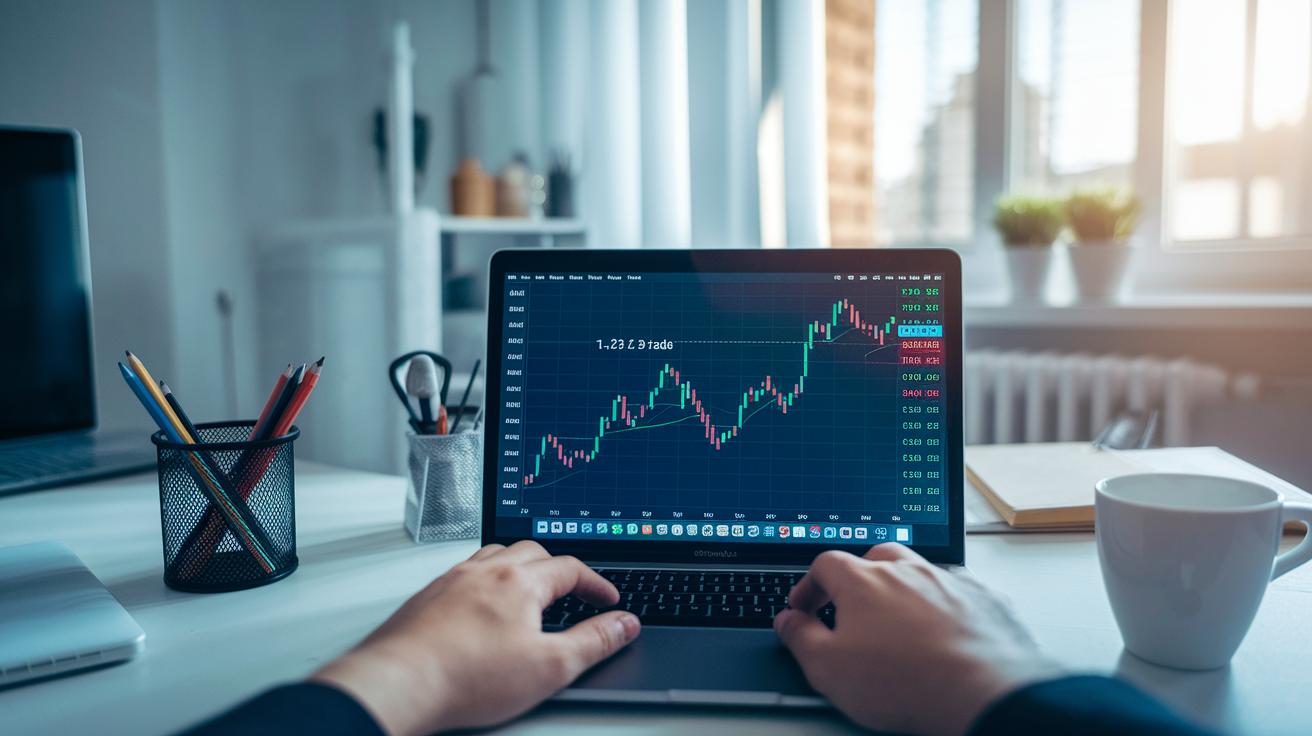
TL;DR: Limit each trade to 1-2% of your account and use stop-loss orders to protect your downside.
Crypto swing trades are best managed by risking only 1-2% of your account per trade. This fixed rule protects your overall portfolio during volatile swings. When you limit exposure on each trade, you keep your capital safe and maintain steady performance over time.
Stop-loss orders are key. Place them just below recent swing lows to cap any losses. Adjust your position size so you never overcommit and spread your funds across different assets. This approach keeps your risk low even when one market event hits.
Use risk calculators and monitoring tools to track your exposure and drawdowns. Sticking to a systematic plan helps you avoid emotional decisions and lets you handle market ups and downs with confidence.
Analyzing Chart Patterns and Volatility in Crypto Swing Trades
Swing trading relies on clear chart patterns that help you spot when a trend might reverse or continue. Traders often watch for shapes like double tops and bottoms, head and shoulders, triangles, flags, and pennants. For example, a head and shoulders pattern can hint at a coming drop, while a triangle might lead to a breakout. Recognizing these shapes helps you time your entries and exits more confidently.
Volatility is key to trusting these patterns, and that's where the Average True Range (ATR) comes in. ATR measures price swings over 14 days (a simple way to gauge market movement). A low ATR can back up a chart signal, while a high ATR might make you cautious about a trade.
By combining clear chart patterns with solid ATR readings, you create a stronger setup for swing trades. This method cuts through market noise, helping you avoid false signals and stick to a disciplined trading plan.
Selecting Crypto Assets and Diversification for Swing Trading

TL;DR: Stick with major coins like Bitcoin, Ethereum, and BNB for quick trades, and add a small portion of mid-cap coins like Solana, Avalanche, and Chainlink for extra gain potential.
Start with the heavy hitters, Bitcoin, Ethereum, and BNB. Their high liquidity means less slippage and tighter spreads. This makes them easier to trade quickly and reliably. Check lists like top cryptos by market cap regularly to be sure you're trading coins with strong volume.
For those with some trading experience, consider adding a mix of mid-cap coins such as Solana (SOL), Avalanche (AVAX), and Chainlink (LINK). These coins can show sharper moves and clearer trends, which may lead to bigger gains. However, to manage risk, limit your mid-cap allocation to 10–20% of your capital while keeping most of your money with the majors. This balanced mix helps protect your portfolio and lets you take advantage of different market moves.
Building a Crypto Swing Trading Plan and Tracking Performance
TL;DR: Create a clear crypto plan, record every trade, and adjust based on simple, key numbers.
Begin with a solid plan. Decide your exact entry and exit prices, choose how much risk to take on each trade, and set profit targets. Write these details down so you have a steady guide and avoid impulsive moves when the market changes.
Keep a trading journal. For every trade, note the date, the asset, your entry and exit prices, and the net gain or loss. This log helps you see what strategies work best and improves your future decisions.
Watch your numbers closely. Track your win rate, the risk versus reward for your trades, and the largest loss you’ve had. Tools like Delta and CoinStats make it easy to log trades and highlight trends in your strategy.
Review these metrics regularly. Small tweaks based on your findings can keep your approach sharp and aligned with market shifts.
Advanced Crypto Swing Strategies and Real-World Case Studies

Crypto swing traders use smart models that scan for momentum shifts, patterns in the numbers, and how different coins move together. These models spot good entry points by crunching market data in real time. For example, one quick check on ETH using a momentum-based EMA crossover led to a 15% gain in just seven days. Traders set up automated alerts and keep an eye on the market manually to catch every chance and time their moves perfectly.
Trend-Following Case Study
A trader noticed that ETH’s 21-period moving average had crossed above its 50-period moving average. This was a clear sign to jump in as the trend was about to change. The position was taken as momentum built, with a stop-loss placed right under recent lows to keep risk low. As the price neared a familiar resistance level, the trader sold portions gradually and locked in a 15% return in just one week.
Breakout Case Study
In another trade, a breakout in SOL was spotted near a big resistance barrier. Automated tools flagged a sudden surge in volume and a fast price move. The trader entered the trade immediately and set a stop-loss just below the breakout point to cut any losses. Profit targets were picked based on past price moves, and this approach netted a 20% gain over two weeks.
Blending automated alerts with hands-on decisions helps traders stay flexible. Using model insights along with smart judgment makes it easier to time entries, capture gains, and manage risk in a fast-moving market.
Final Words
In the action, we broke down crypto swing trading fundamentals and practical strategies. We covered core benefits, key platforms, entry and exit techniques, clear risk management, chart patterns, and balanced asset selection. You explored how a structured trading plan and real-world case studies can guide your moves.
Keep your approach simple and trade-ready. With actionable steps and trusted tools, swing trading crypto could be a game plan to capture medium-term gains and stay ahead of market changes.
FAQ
Swing trading crypto reddit
Swing trading crypto reddit refers to discussions on Reddit about mid-term trading techniques in cryptocurrency markets. Users share tips, strategies, and experiences to help others refine their swing trade methods.
Swing trading crypto strategy
A swing trading crypto strategy focuses on holding coins for days to weeks to capture medium-term price moves. It uses technical analysis and preset entry and exit points to manage risks and maximize returns.
Swing trading crypto course
A swing trading crypto course is an educational program that teaches the fundamentals of medium-term trading in digital coins, covering technical analysis, risk management, and practical strategies for effective trade execution.
Best crypto swing trading strategy
The best crypto swing trading strategy typically involves identifying clear price trends, leveraging technical setups like moving average crossovers, and implementing stop-loss orders to manage risk while capitalizing on market swings.
Swing trading cryptocurrency for beginners
Swing trading cryptocurrency for beginners means learning basic technical indicators, understanding entry and exit criteria, and applying simple risk management techniques to benefit from medium-term price fluctuations in digital currencies.
Swing trading crypto price
Swing trading crypto price entails analyzing the medium-term price movements of digital assets using charts, technical indicators, and volatility measures to determine optimal points for entering and exiting trades.
Swing trading crypto app
A swing trading crypto app is a mobile or web-based platform designed to help traders execute medium-term trades by offering charting tools, technical indicators, and real-time market data for effective decision-making.
Crypto swing trading signals
Crypto swing trading signals are notifications generated by analytical tools or platforms that highlight potential entry and exit points based on technical indicators and market trends to guide traders in making informed decisions.
Can we do swing trading in crypto?
We can perform swing trading in crypto by holding positions for days or weeks to capture market swings. This approach relies on technical analysis, clear entry and exit rules, and disciplined risk management.
Can I make $100 a day trading crypto?
You can make $100 a day trading crypto, but success depends on market conditions, trade size, and effective risk management. This goal requires a solid strategy, discipline, and consistent execution over time.
What is the 1% rule in swing trading?
The 1% rule in swing trading means risking no more than 1% of your account balance on one trade. This rule helps manage risk and protects your capital from significant losses on a single position.
What’s the best crypto to swing trade?
The best crypto to swing trade often includes highly liquid assets like Bitcoin or Ethereum, which offer clear trends, sufficient trading volume, and predictable price movements for executing medium-term trading strategies.