



TL;DR: Home prices will rise slowly; stay sharp and watch local trends.
Home prices are expected to rise steadily, not as steeply as last year. Some regions with strong job markets and local improvements might see a boost in growth. Demand holds firm despite fewer homes on the market.
For buyers and investors, this balanced outlook means there are opportunities, if you pay attention to the details. Read on to see what may lie ahead for our housing market.
housing market outlook: Brimming with Potential
Home prices are set to climb more slowly this coming years. In 2025, prices are expected to go up by about 3.8%, then 3.6% in 2026, compared to a 5.2% jump in 2024. Median home prices should hit around $410,700 in 2025 and about $420,000 in 2026. In fact, Statista forecasts a median of roughly $426,000 by Q2 2026. Mortgage rates will likely stay between 6.5% and 7.5% through 2025-2027, then might ease to 5.5%-6.0% by 2028-2029. For more details, check out the market outlook today.
In 2024, housing supply grew by 27% versus 2023, yet it still trails behind pre-pandemic levels. The market needs 18 million new homes over the next decade. Even with these supply issues, rental demand stays strong, with rents expected to grow by 2%-3% per year. This means both buyers and renters need to act carefully while exploring their options.
The ongoing supply gap may help support home prices even if growth slows. Some regions, with better jobs and improved infrastructure, could see faster price gains than the national average. With tight inventory and steady rental demand, staying informed is key for investors, buyers, and market players. All in all, these trends show a housing market with plenty of promise despite challenges in affordability and supply.
Price Trajectory and Regional Variations in the Housing Market Outlook

Home prices are expected to rise 3% to 5% per year over the next couple of years, after last year’s 5.2% gain. In 2025 and 2026, higher-priced coastal markets may cool off, while Midwest cities, suburbs, and select Sun Belt areas could see gains of 4% to 6%. Each region is shaping its own path based on local job markets and economic conditions, think of it as a scorecard where every area tells its own story.
Limited housing inventory, strong job growth, and targeted infrastructure improvements are driving these trends. Areas with steady employment and a better supply of homes tend to see more consistent price increases. Upgraded local roads, utilities, and community facilities also boost buyer confidence, pushing prices higher in neighborhoods with recent improvements. For example, a suburb with recent infrastructure upgrades might experience nearly a 6% increase, showing how local changes can significantly affect home price growth.
Mortgage Rate Trends in the Housing Market Outlook and Affordability Study
Mortgage rates today mirror the Fed's steady approach. The central bank’s careful moves have nudged lending costs lower, even as the market adjusts to changes in supply and demand. In the past, small rate drops helped spark home buying when inflation cooled and debt concerns led to a patient policy stance. For instance, in the mid-2000s, even a minor rate cut quickly revived homebuying activity, showing just how sensitive the market can be to shifts in policy.
The fact that mortgage rates are still near 5% means many buyers face higher costs, which can limit their market participation and affect regional affordability. Studies confirm that even small drops in rates can boost purchasing power and increase demand, which in turn can push up home prices. With the Fed’s measured rate adjustments, there’s hope that these affordability pressures will ease over time as supply and demand balance out.
Inventory and Construction Outlook in the Housing Market Outlook
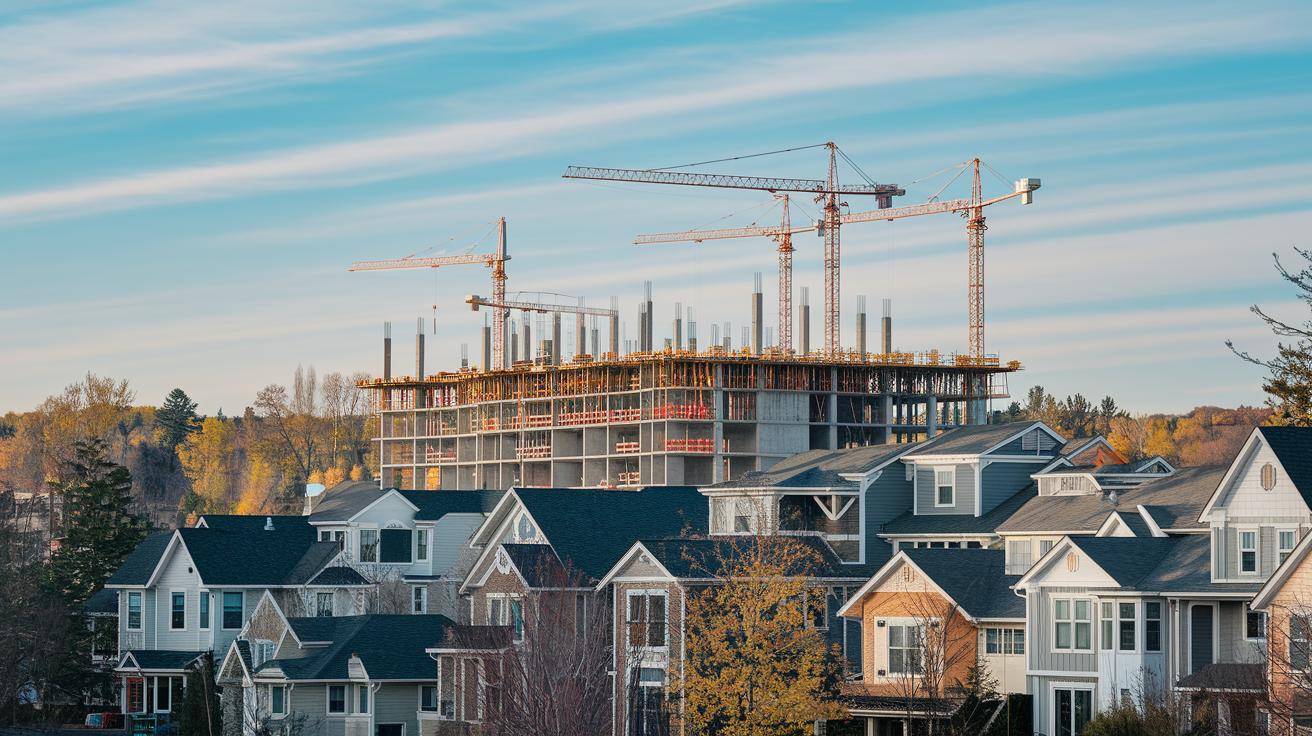
TL;DR: New building activity and rising inventory signal hope for easing supply issues, but delays and affordability challenges remain.
Inventory levels jumped 27% in 2024 compared to 2023, yet they still trail behind what they were before the pandemic. New construction is stepping up to ease supply problems. Spending on single-family homes is expected to grow by 13.1% in 2025 and 12.4% in 2026. Developers are focusing more on build-to-rent projects to help those who struggle with homeownership. In some cases, a developer might invest more in single-family projects in areas where homes are scarce, thereby giving buyers and renters more choices.
The apartment market is also picking up steam. Over 500,000 new units could hit the market by 2025, although delivery delays might slow the progress. These trends show a market that is working to meet demand despite ongoing challenges. Investors and market watchers should keep an eye on these developments since consistent construction could eventually bring more balance to the housing market.
| Indicator | 2024 Data | 2025 Projection | 2026 Projection |
|---|---|---|---|
| Inventory Change (%) | 27% | 24% | 22% |
| SF Construction Spending (% growth) | N/A | 13.1% | 12.4% |
| Apartment Units Delivered | 400,000 | 500,000+ | 450,000 |
Rental Market Forecast in the Housing Market Outlook and Emerging Trends
Rental demand is set to stay strong through 2029, with rents rising by 2% to 3% each year. Single-family rentals are taking the lead because more people now want extra space and flexibility. Remote work and rising living costs are pushing families toward homes that offer more comfort and privacy compared to crowded urban apartments. For example, a family in a single-family rental may enjoy a quieter, more relaxed setting than in a busy apartment.
New options in the rental market are gaining ground. Think of co-living spaces, build-to-rent communities, senior housing, and prefabricated homes. These models help tackle affordability issues by offering different ways to share costs and use space. In some areas, rent could climb up to 4% thanks to local supply and demand differences. Co-living, for example, lets residents split expenses and enjoy shared amenities, which can lower the cost for everyone. These fresh ideas are reshaping rental strategies in competitive markets.
Long-Term Drivers and Risks in the Housing Market Outlook (2027–2029)

More older adults will boost demand for senior housing and homes built for easy accessibility through 2029. Communities must update housing designs and services to support independent living and address mobility challenges.
Climate risks are changing how properties are priced, especially in coastal and high-risk areas. Home buyers are now more cautious about regions prone to storms and wildfires, and they prefer places with fewer environmental hazards. These trends point to future realty patterns shaped by both demographic changes and environmental concerns, offering new opportunities and challenges for developers and investors.
New supply and refinancing risks add further complexity to the market. By 2028, housing supply should grow, which could balance the market after years of low inventory. However, homeowners who refinanced at low rates in 2021 and 2022 may face higher payments when adjustable-rate mortgages reset from 2026 to 2027.
Even with these pressures, a major market crash seems unlikely due to strong homeowner equity. While inventory levels have not fully returned to pre-Covid standards, they have noticeably improved. Investors and developers should monitor these shifts as they plan for future opportunities and risks.
Actionable Advice for Buyers, Sellers, and Investors in the Housing Market Outlook
TL;DR: Buyers should act fast on local market trends and lock in mortgage rates, while sellers need to set smart prices and boost property appeal.
In October 2025, existing-home sales hit 4.1 million, up 1.2%, and pending-home sales climbed 1.9%. The median home price stands at $415,200 with only 4.4 months of inventory, which means the market stays hot. Renting is nearly 50% less expensive than owning, adding to the affordability challenge. Since everyone's financial situation is unique, tailor your plan to fit your needs.
For buyers:
- Watch your local market closely to pick the best time to buy.
- Lock in your mortgage rate early to avoid rising rates.
- Look for areas with steady or growing inventory.
- Consider an adjustable-rate mortgage if you plan on long-term ownership.
- Compare your financing choices to secure the best deal.
For sellers:
- Set your price to match the strong market demand.
- Make thoughtful upgrades that enhance your home's look.
- Invest in staging to make your home more attractive.
- Use multiple marketing channels to reach potential buyers.
- Consider listing when competition is lower in tight market conditions.
Final Words
In the action, this post broke down annual price trends, mortgage rate shifts, and the impact of limited inventory on the housing market outlook. We highlighted regional differences, rental sector performance, and long-term risks through 2029. Practical steps for buyers, sellers, and investors were shared to help you act decisively in real-time. The insights provided serve as a clear map to navigate market changes confidently. Stay alert, stay ready, and use this outlook as a guide to smart investment choices.
FAQ
Q: What is the housing market outlook for the next 5 years?
A: The outlook indicates steady growth with moderate price gains around 3.8% in 2025, slightly easing into 2026, supported by stable homeowner equity and a gradual increase in housing inventory.
Q: When will the housing market crash again, and will it crash in the next 5 years, 2026, or 2027?
A: Housing market crashes remain unlikely over the next five years. Strong homeowner equity and gradual inventory improvements suggest more measured adjustments than a sudden downturn.
Q: What is the real estate forecast for the next 10 years?
A: Over the next decade, expectations are for gradual price increases, stabilized mortgage rates, and a continued rise in rental demand, with supply improvements helping balance the market.
Q: What are housing market predictions for 2028?
A: Projections for 2028 include a drop in mortgage rates to roughly 5.5%-6.0% and steady, modest price growth as supply gradually improves and overall market balances tighten.
Q: What are the 2026 housing market predictions?
A: In 2026, expect modest home price increases, mortgage rates staying around 6.5%-7.5%, and continued low inventory that supports a market with cautious but consistent growth.
Q: Is the housing market expected to go down?
A: The market is expected to see slower price appreciation rather than a sharp decline, due to persistent demand and solid homeowner equity, although regional differences may occur.
Q: Are home prices in Arizona going down?
A: In Arizona, home prices are likely to remain steady given strong local job growth and limited supply, despite some areas experiencing slower appreciation compared to national trends.
Q: Is a recession coming in 2025 in the housing market?
A: A recession in the housing market is unlikely in 2025 as steady price growth, balanced mortgage rates, and ongoing demand contribute to market stability across the country.
Q: Should I buy a house now or wait for a recession?
A: Buying now might be wise for many, since stable pricing and predictable mortgage rates make for reliable financing; however, personal finances and local conditions should ultimately guide your decision.