



TL;DR: Open an IRA today to start building tax-friendly wealth for a secure retirement.
Think of your money as a seed. With time and care, it can grow strong like a tree. An IRA offers a safe place for your savings with options like Traditional, Roth, and Rollover. Learn the basics now to set yourself up for a bright, worry-free retirement later.
IRA Fundamentals: Definition, Types, and Core Benefits
An IRA is a tax-friendly retirement account that helps you grow wealth with money that grows tax-deferred or even tax-free. Think of it as planting a seed that will eventually grow into a sturdy tree. Early savers can see their money build over time, just like a small acorn becomes a mighty oak.
There are three main IRA types:
-
Traditional IRA: You contribute pre-tax dollars, which can lower your taxable income. Taxes come due when you take money out in retirement, so this option works well if you expect to be in a lower tax bracket later.
-
Roth IRA: You invest money after taxes. Once the account is open for at least five years and you’re 59½ or older, your withdrawals are tax-free. This lets your savings grow without any tax surprises down the road.
-
Rollover IRA: This account allows you to move funds from employer plans like 401(k)s, 403(b)s, or pensions. It keeps the tax-deferral benefits intact and gives you more investment choices.
IRAs let you invest in stocks, bonds, mutual funds and more. While 77% of working Americans have a retirement account, only 30% clearly understand the differences between the IRA types. Knowing these details helps you choose a plan that fits your financial goals and retirement timeline.
IRA Eligibility Criteria and Annual Contribution Limits

TL;DR: To contribute to an IRA, you need taxable earnings, like wages or salaries, and the annual limit for 2023 is $6,500, or $7,500 if you’re 50 or older.
You can only open and fund an IRA if you have taxable income from work. This includes wages, salaries, or tips. Income from interest, dividends, Social Security, or child support doesn’t count. If you get a pay stub from your job, you’re likely eligible. Pick the provider that matches your needs, whether it’s a bank, credit union, or brokerage firm.
Key points:
- Only taxable earned income qualifies for IRA contributions.
- Earnings not from work won’t count toward your contribution limit.
- Many financial institutions offer easy online registration to help you start saving quickly.
In 2023, the IRS limits your annual IRA deposit to $6,500. If you are 50 or older, you can contribute an extra $1,000 each year, for a total of $7,500. This catch-up option is designed to give older savers a boost as they near retirement. Make sure to check for updated limits each year, as adjustments for inflation might change them.
Sticking to these guidelines helps ensure that your contributions build a secure and bright retirement future.
Traditional vs. Roth IRAs: Comparing Tax Benefits
TL;DR: Use a Traditional IRA for an immediate tax cut, or choose a Roth IRA for tax-free income later.
Traditional IRAs let you deduct your contributions now to reduce your taxable income. Later, when you withdraw the money in retirement, it's taxed as ordinary income. On the other hand, Roth IRAs are funded with money that's already been taxed. As long as the account is open for at least five years and you’re 59½ or older, your withdrawals are completely tax-free.
Key points to consider:
-
Traditional IRA:
- Contributions lower your taxable income today.
- Withdrawals are taxed as regular income in retirement.
-
Roth IRA:
- Contributions are made with after-tax dollars.
- Qualified withdrawals are completely tax-free.
Only 30% of account holders truly understand these differences. For more practical examples and a detailed comparison, check out the IRA Fundamentals section.
Rollover IRAs and Transfer Strategies

TL;DR: Move funds from a 401(k) or similar plan to a rollover IRA to keep tax advantages when done correctly.
A rollover IRA accepts money from employer-sponsored plans like 401(k)s, 403(b)s, or pensions. This lets you keep your tax-deferred growth and may let you skip required minimum distributions if you’re still working.
There are two ways to move your money:
-
Direct rollover: Your money goes straight from your employer plan to your IRA. This is like handing a package directly from one courier to another. It avoids the 20% tax withholding that happens with other methods.
-
Indirect rollover: You receive a check in your bank account and must deposit the entire amount into your IRA within 60 days. If you don’t, you could face taxes and penalties. Imagine getting a check that you need to cash immediately to avoid extra fees.
Here’s how to do a direct rollover:
- Contact your plan administrator to ask for a direct (trustee-to-trustee) transfer.
- Make sure your new IRA can receive the funds.
- Follow up with both institutions to confirm the transfer goes through correctly.
Taking these steps secures your tax-deferred status and helps you manage your retirement savings with confidence.
Investment Options and Diversification in an IRA
An IRA gives you more choices than many workplace plans. You can use it to invest in stocks, bonds, mutual funds, ETFs, CDs, or simply hold cash. This lets you build a portfolio that matches your risk level and long-term goals.
When you open an IRA, pick investments that match your market ideas. For example, if you believe in technology or healthcare, you might choose funds focused on those sectors. You could also go with a target-date portfolio that shifts its mix as you get closer to retirement. For even more control, consider a self-directed brokerage account to adjust your holdings as market conditions change.
Spreading your investments is key to lowering risk. Diversification means putting your money in different asset types and sectors so one poor performer doesn’t hurt your overall savings. If stocks take a hit, bonds or CDs might help keep your portfolio steady. Remember to check and rebalance your portfolio regularly to keep it aligned with your retirement plans.
Key ways to diversify include:
- Mixing equities and fixed-income investments
- Including both domestic and international funds
- Allocating some money to safer choices like CDs or cash
- Using a self-directed approach to choose specific stocks or bonds
| Investment Type | Potential Benefit |
|---|---|
| Stocks & ETFs | Long-term growth |
| Bonds & CDs | Stability when markets are volatile |
| Mutual Funds | Simplified diversification |
Review your investment choices at least once a year. This helps ensure your portfolio stays balanced and ready to support a strong, secure retirement.
Withdrawal Rules, Penalties, and Retirement Income Planning

TL;DR: Don’t pull funds from your IRA too soon. Doing so before age 59½ can trigger a 10% penalty and extra taxes. Plan your withdrawals carefully to keep your retirement income on track.
If you take money out of a Traditional or Rollover IRA before you turn 59½, you’ll owe a 10% penalty on the amount you withdraw plus ordinary income tax. This rule is designed to help you save for the long term. However, if you meet specific conditions, like having a disability or qualifying medical expenses, you might avoid the penalty. Think of it like a simple traffic law: if you rush without meeting the requirements, you’re likely to face a fine.
Roth IRAs work more flexibly. Once your account is at least five years old and you’re over 59½, you can take money out without triggering penalties or taxes. This means if you plan ahead like a retiree who waits for the right moment, every dollar you withdraw supports your lifestyle instead of paying extra fees.
Retirement income planning is all about timing. Since regular IRA withdrawals add to your taxable income, arranging your distributions to fit your retirement tax bracket is smart. Also, the IRS sets required minimum distributions (RMDs) to kick in at age 73. Starting RMDs at this age lets your account grow tax-deferred and can enhance your retirement funds.
Key points:
- Withdrawing early from a Traditional or Rollover IRA costs you a 10% penalty plus income tax (unless you qualify for an exception).
- Roth IRA withdrawals are penalty- and tax-free if the account has been open for more than five years and you’re over 59½.
- Begin RMDs at age 73 to allow your savings to grow tax-deferred while keeping a steady income stream.
Opening and Managing Your Individual Retirement Account
TL;DR: Pick a provider that lets you quickly sign up online, set up automatic deposits, and offers low fees to help your money grow over time.
If you earn income, you can easily open an IRA through a bank, credit union, or brokerage firm using their online portal. Most platforms let you fill in basic details like your work income and personal info, then you’re set up in just a few clicks.
Once your account is active, set up automatic deposits to build your savings steadily. It’s as simple as scheduling a weekly transfer, similar to paying a regular bill.
Mobile apps let you check your balance, adjust contributions, and review performance on the go. Just be sure to compare fee schedules like maintenance charges, trading fees, and fund expense ratios to keep costs down over the long run.
Start now by reviewing fees and setting a regular contribution plan to secure your retirement future.
IRA vs. Employer Plans and Alternative Savings Programs
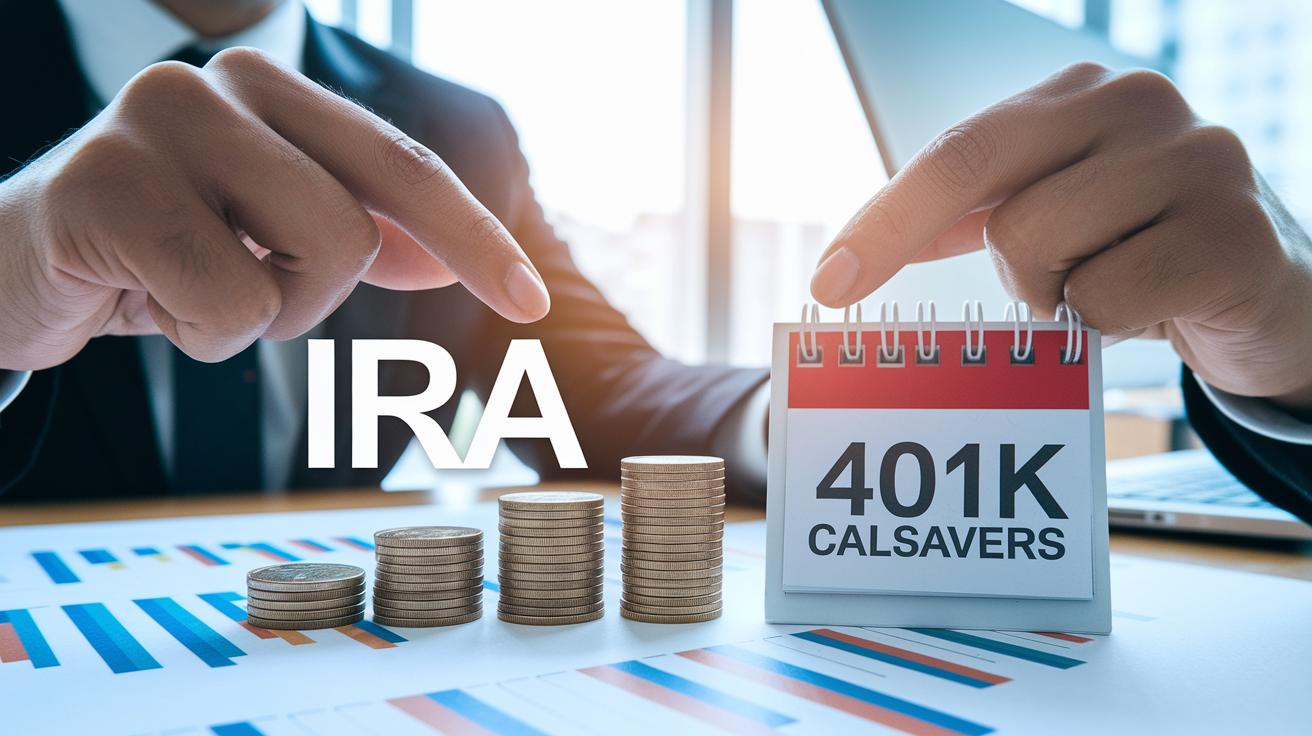
TL;DR: Use an IRA if you want full control over your investments. Choose a 401(k) or CalSavers if you prefer automatic enrollment and employer bonuses.
IRAs let you decide where your money goes. You can invest in stocks, bonds, or mutual funds and change your strategy as your goals evolve.
Employer plans like 401(k)s often offer matching contributions that boost your savings. However, your choices are preset, which limits how much you can customize your portfolio.
Key points include:
- 401(k) plans offer employer matches that grow your savings but limit your investment options.
- CalSavers automatically enrolls workers without an employer plan and gives you a set range of investment choices.
- IRAs give you complete control, making them ideal if you enjoy hands-on management.
While IRAs need more active attention, they let you tailor your retirement plan. Employer plans and CalSavers make saving simpler and provide guidance for those who prefer a more structured approach.
Final Words
In the action, this post breaks down key IRA points. We discussed custody of retirement funds, the differences among Traditional, Roth, and Rollover IRAs, and how each can work for you. We also looked at eligibility criteria, annual contribution limits, investment options, and withdrawal rules.
The guidance shows you how to set up and manage an individual retirement account ira smartly. Follow these steps to build a tax-aware portfolio and take clear action toward a more secure financial future.
FAQ
Frequently Asked Questions
What is an IRA account and how does it work?
The IRA account is a tax-advantaged retirement savings tool that allows tax-deferred or tax-free growth depending on the type. It’s available from banks and brokerage firms for self-directed saving.
What does “individual retirement account” mean?
The term individual retirement account means a self-funded account designed to help you save for retirement while offering tax benefits, such as deferred or tax-free growth on your investments.
How do IRA withdrawals work?
IRA withdrawals depend on your account type. Traditional IRA withdrawals are taxed as income and may incur penalties if taken before age 59½, while qualified Roth IRA withdrawals are tax-free.
What is an IRA calculator?
An IRA calculator estimates future savings by modeling your contributions, potential growth, and tax impacts, giving you a clearer picture of your retirement planning progress.
How does an IRA compare with a 401k?
An IRA usually offers a wider range of investment options and flexible contribution choices, while a 401k often comes with employer matching and higher contribution limits, fitting different financial strategies.
What are the best IRA accounts for beginners?
The best IRA accounts for beginners typically feature low fees, easy-to-use online tools, helpful educational resources, and reliable customer support to simplify your entry into retirement saving.
What features does IRA Fidelity offer?
IRA Fidelity provides extensive investment choices, comprehensive research tools, and dependable customer service, making it a solid option for managing and growing your retirement savings.
What is the difference between an IRA and an individual retirement arrangement?
The terms IRA and individual retirement arrangement refer to the same tax-advantaged retirement account, offering similar tax benefits and saving opportunities for your future.
What are the Irish Republican Army and related groups?
The Irish Republican Army refers to several paramilitary organizations, including the Provisional IRA, Continuity IRA, and Irish People’s Liberation Organisation, while the Loyalist Volunteer Force represents unionist groups.