



TL;DR: Use news trading algorithms to act on breaking headlines and make profits fast.
Breaking news can be a money-maker. These algorithms jump into action seconds after big events like earnings reports or product launches. They follow set rules to buy and sell quickly, helping to smooth market moves. This post shows how live data and clear, fast strategies can turn news into profit right when it counts.
Core Mechanics Behind News Trading Algorithms
News trading algorithms work by reacting to real-world events instead of trying to predict future prices. They keep an eye on market triggers like earnings reports, economic data, product launches, government decisions, and merger rumors. When a company posts better-than-expected earnings, the algorithm sees a rush in buying and may quickly enter a long position to take advantage of the momentum.
These systems stick to clear rules for entering and exiting trades, and they include strict risk controls. They set firm thresholds for triggering a trade and precise conditions for closing a position. By watching for changes in volatility after major news, they catch short-term price moves. This means even a quick spike in volume, such as after a product launch announcement, can turn into a profitable trade.
Traders count on these models because they easily adapt to changing market moods. By constantly tracking economic events and adjusting risk measures, the algorithms fine-tune position sizes and add stop-loss orders to protect gains and limit losses. In short, news trading algorithms focus on immediate, data-driven moves based on clear market signals rather than trying to forecast future trends.
Implementing Real-Time News Data for Trading Algorithms
TL;DR: Use live news feeds and small, smart scripts to trigger trades in seconds.
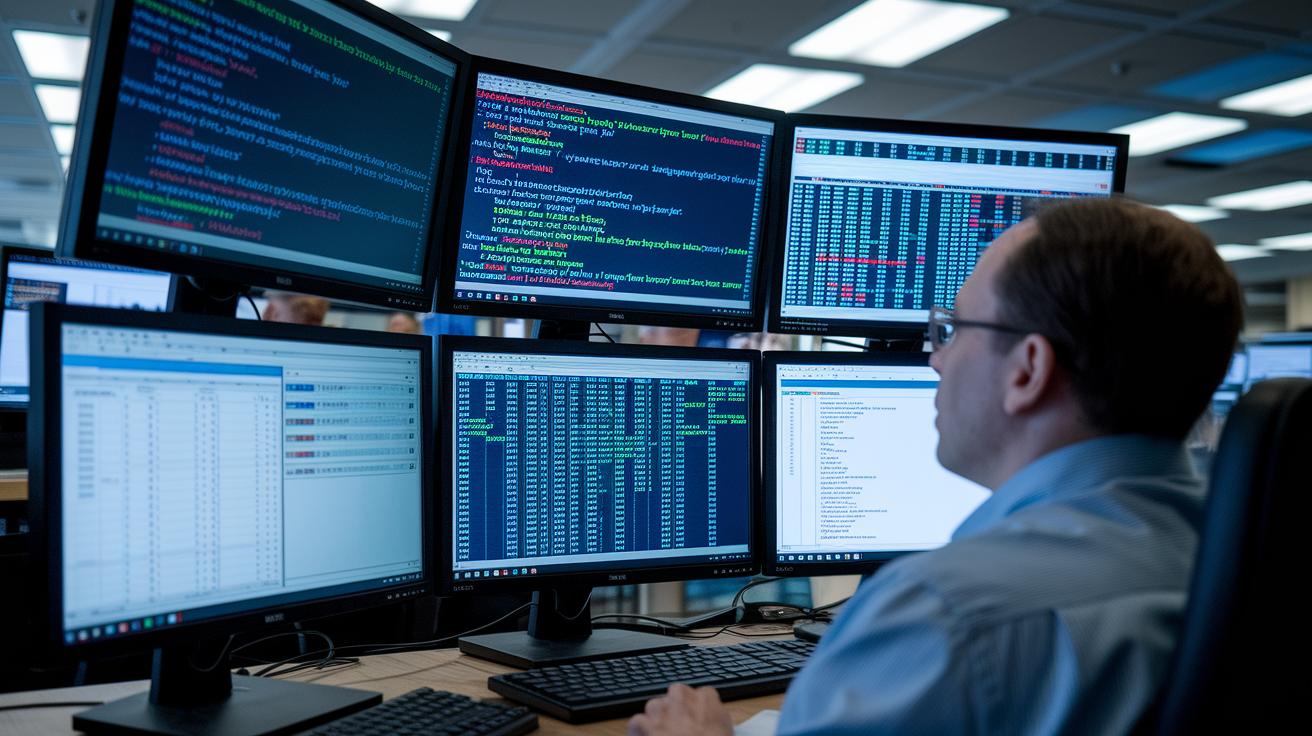
Real-time news filters help trading systems quickly read market headlines and act fast. By using live updates, these systems adjust positions far quicker than manual methods. Traders can run tiny Python scripts (often under 25 lines) to turn messy news into clear trade signals. For example, a simple script extracts headlines and timestamps so traders spot sudden shocks that move the market.
Automated news parsing uses sturdy workflows that run all day and night. These systems scan news feeds 24/7, ensuring no important update is missed. When key events occur, algorithms react in moments, letting trades adjust as market views shift. With this setup, traders separate real signals from noise and let automation handle the heavy data load when every second counts.
- Scrape Google News for headline data and publication times
- Use structured news APIs to get filtered, ready-to-use information
- Run the Google News RSS feed with Python feedparser for steady data flow
By merging efficient coding techniques with trusted data sources, traders build systems that react immediately to market events. This approach ensures that you capture profitable trends as soon as they emerge.
Building a Sentiment-Driven Automation Engine in News Trading
This module turns news headlines into clear trade cues. It starts by cleaning the text, removing common words and normalizing the content, before running it through a simple machine learning model built on past news data. The model gives each headline a score from -1.0 (strong sell) to 1.0 (strong buy). For instance, a headline about new regulations might lower the score and trigger a sell order.
The engine uses real-time natural language processing to catch the full meaning of each headline. With just a few lines of code (sometimes fewer than 25), it parses the data and sets off trade commands once the score hits a set threshold. This quick scoring method makes it easy to act on even small shifts in market sentiment. Combining these scores with other market signals helps fine-tune trade entries and exits.
| Sentiment Score Range | Trading Signal |
|---|---|
| -1.0 to -0.1 | Sell |
| -0.09 to 0.09 | Hold |
| 0.1 to 1.0 | Buy |
By blending sentiment analysis with automated headline review, this setup turns qualitative news into precise trading signals. Traders can react fast, adjusting positions as soon as market feelings change. This approach not only cuts risk but also helps capture profit opportunities in real time.
Integrating Order Execution and Risk Management in News Algorithms

News trading systems quickly turn market sentiment from headlines into immediate orders. When a headline creates a sentiment score, the system sends orders straight to the market using pre-set routing rules. This direct link cuts out human delays, making sure orders hit the market at the best moment. In short, real-time sentiment data becomes clear instructions that let traders capture moves before conditions change.
Risk controls are built into the system to handle the volatility that comes with big news. Tools like stop-loss orders, take-profit targets, and flexible position sizing work together to limit losses and lock in gains. When economic surprises or regulatory decisions shake the market, these measures help calm the storm. Time-based exits add another layer of defense by closing positions before market swings worsen.
Dynamic order routing finds the best trading venues, reducing slippage and market impact. Rigorous testing shows that orders flow smoothly, even when the market is moving fast. The system’s risk tools also keep an eye on event risk and adjust orders as needed to match the market’s pace. This means trades stay efficient and cost-effective.
Our risk management framework is tuned to react to shifts in market volatility after major news. It constantly monitors trade performance and automatically adjusts position sizes and stops if the market moves sharply. By combining automated controls with thorough testing, traders can manage risk better while still taking advantage of market trends.
Backtesting Frameworks and Performance Metrics for News Trading Algorithms
Backtesting uses past event data to show how a trading strategy might have performed. It looks at events like earnings announcements, economic reports, product launches, and regulatory decisions. By replaying these moments, you can see how your algorithm would have entered and exited trades, giving a clear idea of potential gains and risks.
One study found that stocks signaled as "Buy" by the algorithm beat the S&P 500 by 98.4% last year. This kind of result highlights why it's important to test your strategy on historical data. It helps you spot what works and what doesn’t, whether your model is catching quick market jumps or managing exits properly.
The next step is performance tuning. Here, key metrics come into play. The Sharpe ratio tells you if the returns are worth the risk taken, while drawdown analysis shows possible losses during turbulent times. Other important measures include how fast the system can react to news (latency impact) and how often events trigger successful trades (hit rate). Together, these tools help you fine-tune your news trading algorithm and stay competitive in fast-moving markets.
Case Study: Deploying an AI-Driven News Trading Bot with Minimal Code

TL;DR: Our team built a trading bot with under 25 lines of Python that reads live headlines, gauges sentiment, and trades automatically.
A team built a smart news trading bot on ProfitView using fewer than 25 lines of Python. The bot fetches live headlines, checks their sentiment (or tone), and then makes trade decisions fast. It uses only a few simple rules to turn news into clear buy or sell signals without needing a complex setup.
During live trading, the bot generally posted profits under normal market conditions. It processed news quickly and fired off trade orders with little delay, thanks to a solid machine learning setup that translates headline tone into action. However, a surprise, like sudden chatter about IMF loans in El Salvador, triggered big price swings and heavy losses. That challenge taught us valuable lessons.
In response, we added extra risk controls, including stop-loss and take-profit settings. These tweaks help lock in gains and limit losses when the market turns unexpectedly. This project shows that a simple design, with ongoing improvements, can drive efficient, automated trading that evolves with market trends.
news trading algorithms Spark Profitable Market Trends
News trading algorithms are evolving fast. Traders are now using advanced techniques to forecast how news events will impact the market. They are experimenting with clustering analysis and anomaly detection to cut through market noise and spot emerging trends.
Alternative data sources, like social media feeds and unconventional text inputs, add new layers of insight into investor sentiment. These fresh signals help systems detect small shifts that might trigger market moves, letting traders act quickly and precisely.
Predictive market models are now a key part of advanced trading methods. These models mix traditional market data with live news updates to create a fuller picture of future price actions. This blend supports fast trade execution and strategies like statistical arbitrage (profiting from minor price differences).
Refinements in algorithm tuning make these systems even sharper. Better calibration means less noise and more accurate signals. At the same time, ethical guidelines and regulated automation ensure fair operations. As these technologies mature, integrating alternative data with predictive models will help traders better anticipate market trends and seize profitable opportunities.
Final Words
In the action, we broke down how news trading algorithms react quickly to market events. We looked at event-driven trading approaches, real-time data feeds, sentiment scoring, automated order execution, and even backtesting strategies to track performance.
We wrapped up with a hands-on case study and a peek at upcoming trends. All this helps DIY investors build a smarter, action-ready system with news trading algorithms. Stay positive and keep refining your strategy.
FAQ
What are the best news trading algorithms and what does Reddit say about them?
The best news trading algorithms use real-time headlines and economic events to trigger trades. Community discussions on Reddit often highlight systematic and event-driven strategies that efficiently structure entry, exit, and risk management.
What do PDF resources on algorithmic trading strategies provide?
PDF guides on algorithmic trading strategies detail systematic methods and rules-based approaches. They offer insights into processing market and news data to drive trading decisions for both beginners and experienced traders.
What features define the best trading algorithms software?
The best trading algorithms software typically integrates real-time news feeds, automated order execution, and risk management tools. This setup simplifies trade decisions by combining market data with structured trading signals.
What is algorithmic trading and how does it help beginners?
Algorithmic trading is a method where computer programs execute trades based on set rules and market data. Beginners can benefit from its systematic approach, which processes news and price signals to generate trade ideas.
What is an algorithmic trading app designed to do?
An algorithmic trading app brings market data, automated news analysis, and trading signals to your mobile device. It allows users to monitor and adjust trades on the go while relying on systematic trade execution.
Is algorithmic trading legal?
Algorithmic trading is legal in most markets as long as traders follow regulatory guidelines and risk management best practices. Traders should always verify that their systems comply with local trading regulations.
Is news trading a good strategy?
News trading is a viable strategy when it leverages rapid, real-time data to respond to market events. It helps capitalize on information shocks, though it requires careful management of associated risks.
What does the 84% rule in trading indicate?
The 84% rule suggests that a specific trading strategy might succeed around 84% of the time. This guideline helps traders estimate the likelihood of favorable outcomes based on historical performance.
What does the 3 5 7 rule in trading refer to?
The 3 5 7 rule sets a framework for timing market entries, exits, and risk management. It simplifies trading decisions by providing preset guidelines for key stages of a trade.
What is the 9.20 strategy in trading?
The 9.20 strategy is a market approach aimed at capitalizing on early session volatility around 9:20 a.m. ET. It focuses on specific price movements and momentum patterns to trigger trades.