



TL;DR: Learn how to use your pension income to build a secure retirement.
Pension income means getting regular cash flows from your working years. With fixed monthly payments, you can cover everyday expenses and enjoy peace of mind.
In this guide, we explain what pension income is, how taxes affect it, and who can receive these benefits. Our goal is to help you use your pension as a reliable tool for a comfortable retirement.
Understanding Pension Income: Definition and Scope
TL;DR: Pension income is money you get in retirement from saved-up funds. It’s not earned through active work and is taxed as regular income.
Pension income is the cash you receive from retirement plans built up over your working years. It’s like a paycheck that comes from money saved by you or your employer, not the money you earn from a current job. This income is taxed at the same rates as your regular income because it counts as deferred pay.
Most pensions come from employer plans where money is put in before taxes. You don’t pay taxes on these contributions until you withdraw the funds during retirement. Enjoy the benefit of letting your savings grow tax-deferred; when you start receiving payments, they’re taxed as ordinary income.
Often, pension benefits are set up as fixed monthly payments that last your entire life. Many plans also adjust for rising living costs or include extra support for a spouse or dependent. This steady income stream is key to managing daily expenses once you retire.
Eligibility and Types of Pension Benefits

TL;DR: To get a pension, you must work a set number of years and reach a certain age.
Your pension usually kicks in if you have worked for a certain number of years and reached a set age, often between 62 and 65. In many defined benefit plans, your retirement income is based on your final average salary and your years of service, typically requiring you to work for 5 to 10 years. This steady income is reserved for those who have built a reliable work history and made regular contributions.
Public pension systems, such as the Texas Teachers’ Retirement System with over 1.6 million members, offer a clear example. These plans give you a lifetime annuity that can adjust for rising living costs and often allow you to pass benefits on to a spouse or dependent, providing additional peace of mind.
Different employers offer different types of pension plans. Private companies usually tie benefits directly to your earnings and years of service, while public pensions may include extra features and more generous formulas to boost income security. Knowing the eligibility rules and benefits of your pension plan can help you plan your retirement and work your pension into your overall financial strategy.
Calculating Pension Income and Benefit Formulas
Your pension is set with a simple formula. A defined benefit plan multiplies a percentage factor (for example, 1.5%) by your final average salary and the number of years you worked. For instance, if you earn $60,000 at the end of a 30-year career and the plan uses a 1.5% factor, each year of service boosts your retirement check. Pension funds also use an assumed rate of return to ensure the plan stays healthy, so these calculations matter.
Many plans add a cost-of-living adjustment based on the Consumer Price Index. This means your pension can keep pace with rising living costs. You can use tools like interactive scorecards from retirement reports to test different scenarios. It lets you see how changes in assumptions, such as the rate of return, affect your future income and help fine-tune your retirement plan.
Understanding these variables is key to modeling a sustainable retirement income. Look at projections that show how a higher multiplier or a longer work history increases your benefits. These tools give clear, real-world examples of how adjustments create a reliable framework to plan your retirement cash flow.
Federal and State Tax Treatment of Pension Income
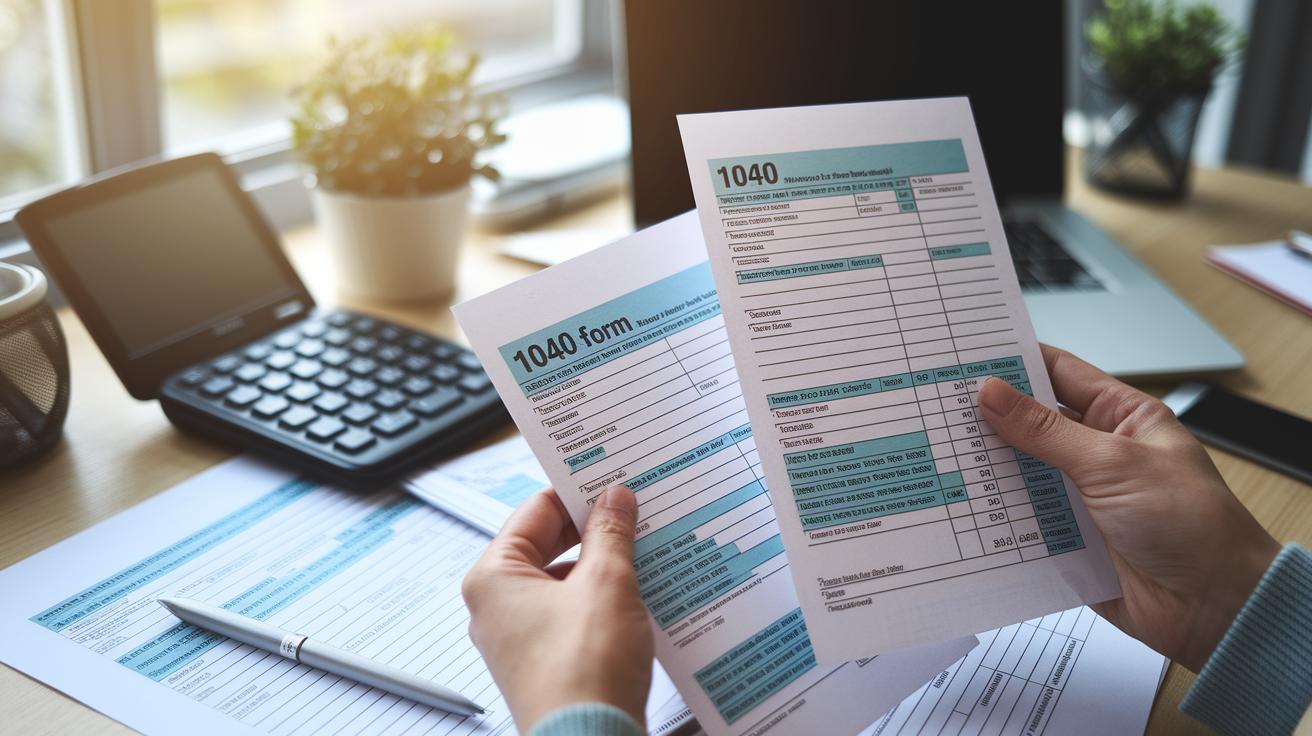
When you get a pension, the government treats it like regular income and you must include it on your Form 1040. Since pension income is not worked income, it can change your eligibility for earned-income tax credits and may affect your Medicare premiums by changing your Modified Adjusted Gross Income (MAGI). Your pension money is taxed at rates that range from 10% to 37%, so keeping an eye on these numbers is key to maximizing your retirement cash flow.
Federal Tax Calculation on Pension Income
You report your pension income on Form 1040, and it becomes part of your total taxable income. This means it fits into those regular tax brackets of 10% to 37%. Adding your pension to other retirement income might bump up your MAGI, which in turn can affect your Medicare premiums. Make sure you record this income correctly to avoid unexpected tax issues and to keep your eligibility for important tax credits.
State Tax Exemptions and Rates
States handle pension income differently. Some states, like Florida and Pennsylvania, do not tax your pension at all, which can boost your available retirement funds. In contrast, states such as California and New York may tax your pension, sometimes fully and sometimes only above certain income limits. Knowing the rules in your state helps you plan where to live in retirement to keep more of your hard-earned money.
| State | Pension Tax Rate | Exemption Conditions |
|---|---|---|
| Florida | 0% | Full exemption for pension income |
| Pennsylvania | 0% | Full exemption for retirement benefits |
| California | Variable | Taxed fully or up to income thresholds |
| New York | Variable | Exemptions apply up to set limits |
| Texas | 0% | No state income tax on pensions |
Strategies to Minimize Taxes on Pension Income
TL;DR: Use smart steps now to lower the taxes on your pension income and keep more of your money for retirement.
Retirees can cut down on their tax bills by planning how different incomes work together. You can take action before retirement and align your income sources to lower the taxes you pay.
Here are some practical steps:
- Convert some of your traditional IRA to a Roth IRA before retiring. This locks in today’s tax rates and may save you money later.
- Time your Social Security benefits with your pension payments to stay in a lower tax bracket.
- Use qualified charitable distributions after age 70 1/2. This helps you meet the required minimum distributions while cutting taxable income.
- Work with a trusted financial advisor who can help balance your pension income with other retirement funds.
- Plan your withdrawals from tax-deferred accounts to avoid a sudden spike in taxable income when combined with your pension payouts.
By following these tactics, you can shrink the amount of pension income that gets taxed. This means more money in your pocket for daily needs in retirement. Taking steps today can build a tax-efficient retirement plan that supports a steady income for your later years.
pension income: Reliable tips for retirement

Retirees often mix income sources like Social Security, retirement account withdrawals, pensions, and part-time work to cover their living costs. A common goal is to replace about 80% of your pre-retirement earnings. Pensions give you steady monthly checks that form a reliable base, while Social Security and other funds help fill in the gaps.
Using scenario modeling can show how changes in your pension or Social Security benefits affect your cash flow. Try different income combinations to find the best mix as your needs change. This method helps you build a balanced plan that can handle rising living costs and varying income over time. Planning with simulation tools today can make managing your money smoother in the future.
Tools and Calculators for Estimating Pension Income and Taxes
TL;DR: Use interactive apps to sketch out your pension income and taxes with clear, real-time data.
Interactive calculators and mobile apps make it simple to plan your retirement income. They break your pension into taxable parts and show your net monthly income. For example, some scorecards let you adjust numbers like inflation and longevity risk to see how changes in timing or conversion might affect your payout. These tools take the mystery out of financial planning.
Mobile apps also offer real-time data that help you test different scenarios. Try tweaking your withdrawal timing or tax bracket to check how these changes affect your cash flow. The easy-to-read interfaces make it simple to understand each tweak and adjust your strategy accordingly.
Start exploring these digital tools and take control of your retirement planning today.
Final Words
In the action, we broke down the basics of pension income. We explored its definition, how benefits are calculated, and the tax rules that shape your payouts.
We also reviewed strategies to ease tax burdens and integrate pension income into a solid retirement plan. Practical tools help you run projections and stay ready for market shifts. Stay positive and make confident moves with the clear, actionable steps provided.
FAQ
What does pension income in Spanish mean?
The term “pension income in Spanish” refers to “ingresos de pensión,” which covers retirement benefits received regularly as non-wage income.
What is the difference between a pension and a 401k?
The pension vs 401k comparison shows that a pension plan offers a guaranteed payment based on your service, while a 401k is a self-directed account influenced by your contributions and market performance.
How is pension income used by Fannie Mae?
Pension income Fannie Mae guidelines treat retirement benefits as acceptable and consistent income when verifying your ability to meet mortgage payments.
How much of your pension income is taxable?
How much of your pension income is taxable depends on the balance of pre-tax versus after-tax contributions, with distributions taxed as ordinary income.
How should pension income appear on a tax return?
Pension income on tax return is reported on Form 1040 under the income section and enters your taxable income, affecting your overall tax liability.
What does pension income in TAP refer to?
What is pension income in TAP refers to retirement benefits documented under specific assistance program criteria, classified as unearned income for eligibility purposes.
Is pension income taxable at the federal level?
Is pension income taxable federal? Yes, pension income is taxed at ordinary income tax rates, impacting your taxable income and possibly Medicare adjustments.
How do you calculate taxes on pension income?
How to calculate taxes on pension income involves adding it to your total income, then applying the appropriate tax brackets and allowable deductions to estimate tax due.
What is pension income?
What is pension income defines it as fixed, periodic retirement payments provided by an employer-sponsored plan and considered unearned income under tax rules.
How much income can you have while still receiving a pension?
How much income can I have and still get the pension is based on your plan’s calculations, as pensions generally depend on service history rather than other income levels.
What is considered a good pension income?
What is considered a good pension income differs per individual but generally means an amount sufficient for covering living needs and ensuring a comfortable retirement.
Do pensions count as earned income?
Do pensions count as earned income? No, pensions are classified as unearned income because they result from retirement benefits rather than active wages or salaries.