


TL;DR: Watch for quick market shifts as modest gains hint at possible choppiness.
The market showed small gains overnight, but fewer stocks are hitting strong averages. This could mean we see some choppy moves at the open. Global news, higher bond yields, and low trading volumes are mixing caution with optimism. This post breaks down these signs and tells you what to watch for when trading begins. Get set for a day where brief jitters may hide real opportunities.
Tomorrow’s Equity Forecast: Key Signals for Opening

TL;DR: Get ready for a cautiously upbeat market open, but watch for quick swings due to low trading volume and mixed technical signals.
Overnight, key indexes nudged up. The Dow added +225 points, the S&P 500 rose by +60 points, and the Nasdaq climbed +269 points. These gains point to a modest, optimistic mood among investors, even though fewer stocks are trading above their 200-day moving average.
Market breadth has tightened. For the S&P 500, stocks above their 200-day average fell from 63.58% to 62.78%. Nasdaq participation dipped to 48.80%, and the Russell 2000 now stands at 65.65%. With the coming holiday-shortened week, trading volume is set to drop further, which could lead to bigger swings at the open.
Key overnight signals include:
- S&P 500 futures showing a slight climb.
- Global stock trends keeping optimism alive.
- Currency moves hinting at a bit of volatility.
- Minor shifts in commodity prices.
- Bond yields inching upward.
- Contrarian moves from fund managers suggesting caution.
Traders should prepare for a session that starts on a roughly positive note but is likely to see some intraday ups and downs. Keep an eye on bond yields, global index trends, and currency shifts. With trading volume lower this week, even small moves could lead to quick reversals. Adjust your positions accordingly as the session unfolds.
Macro and Fed Indicators Driving Tomorrow’s Market Direction

TL;DR: Tough economic data and rising bond yields are pointing to a cautious session tomorrow.
Recent reports on Nonfarm Payroll (NFP) data, retail sales, and the Consumer Price Index (CPI) have come in softer than expected. Weak jobs numbers and mixed inflation signals are causing many to question the strength of consumer demand. Investors are taking note as lower retail performance and slow wage growth may point to a slowdown in economic activity.
Global bond yields are on the rise and adding extra pressure on stocks. Many are now expecting a potential policy change at the upcoming Federal Open Market Committee (FOMC) meeting, relying on updated rate projections for clearer guidance. Even small changes in the Fed’s comments on inflation and growth could move the markets quickly.
These factors are likely to impact the stock market at the open. With a holiday-shortened session, every new piece of data will have a bigger effect. Traders should be ready for increased sensitivity to both good and bad news, as rising bond yields paired with soft economic figures could lead to a cautious and mixed market response tomorrow.
Technical Boundary Levels Shaping Tomorrow’s Trading
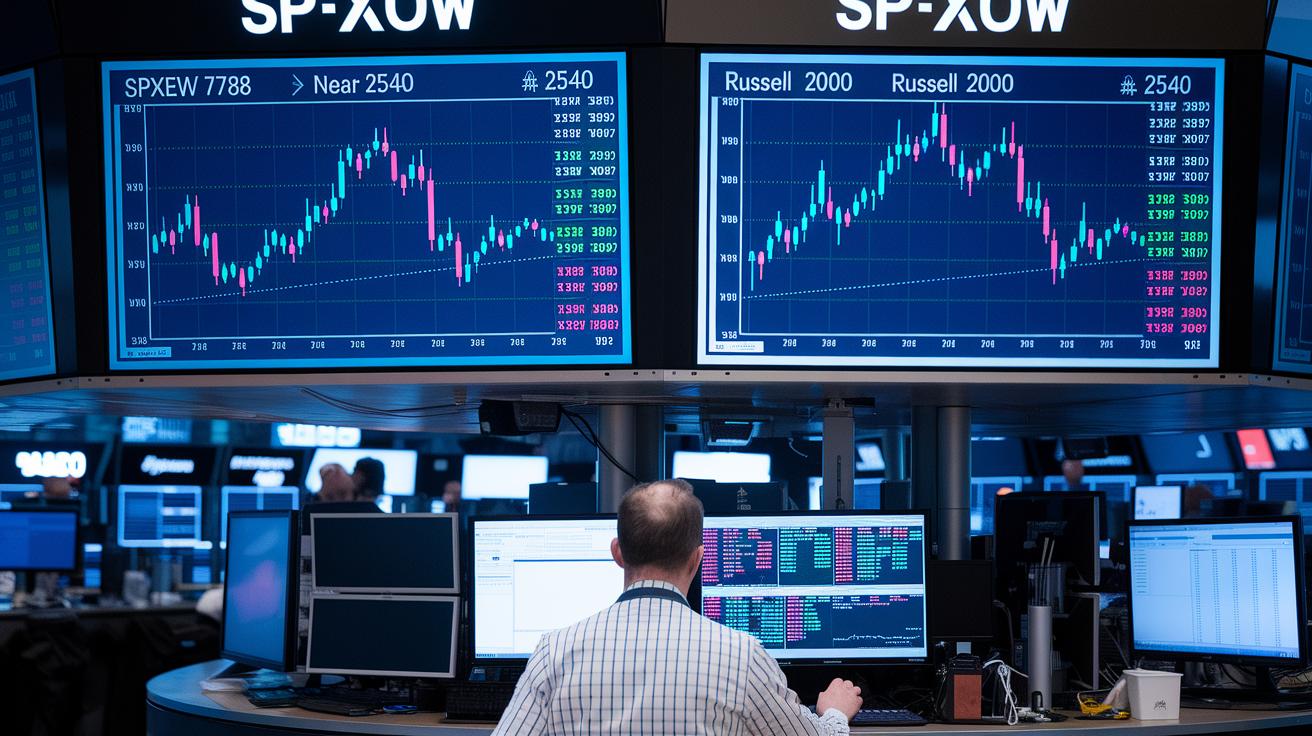
Technical levels offer clear signals for short-term traders. They help you decide when to take profits, add positions, or set stop losses. These levels mark where the market finds support or hits resistance. A level holding strong might mean the trend continues; a break could signal a reversal. For example, traders are watching SPXEW. If it holds near 7,785, that could point to further gains. In contrast, the Russell 2000 struggling near 2,540, especially with a bearish MACD (a trend indicator showing momentum changes), suggests weakness.
Market breadth also matters. When fewer stocks trade above their 200-day moving average, overall market enthusiasm may be fading.
| Index | Key Level | Signal |
|---|---|---|
| SPXEW | ~7,785 | Break above resistance |
| Russell 2000 | ~2,540 | Below breakout, MACD bear signal |
| S&P 500 Breadth | ~63% | Declining, caution sign |
If SPXEW holds near 7,785, you might expect upward movement. Meanwhile, the Russell 2000 not breaking its key level suggests you should act with caution. Fewer stocks above the 200-day moving average add to the warning, as market participation weakens.
Traders should keep these levels in mind. A clear break or bounce can help you adjust your positions and manage short-term risks. Always be ready to act when the market gives a solid signal.
Global Cues and Overnight Session Shifts for Tomorrow’s Open

Overnight, a sell signal emerged that goes against the norm. Fund managers’ bullish sentiment jumped from 7.9 to 8.5. Historical trends show that when sentiment rises this much, the market usually falls about 2.4% in the next three months. Traders should take this as a warning; too much optimism might soon lead to a pullback.
Global bond yields kept climbing, which put pressure on riskier assets and nudged equity futures lower. Higher yields come from tighter money conditions and ongoing trade tensions worldwide. Even small shifts in how investors feel can now cause big market moves, so it might be wise to review your exposure.
Headlines overnight also highlighted a big move in blockchain. A major bank launched a MONY tokenized money-market fund on Ethereum, signaling fresh interest in blending crypto with real-world assets. This step links digital finance with traditional markets and may bring both challenges and opportunities as investors react to the changing crypto landscape.
Risk Control and Volatility Projection Ahead of Tomorrow’s Bell
This holiday-shortened week has thin liquidity, which may trigger quick price swings. Fewer stocks trading above their 200-day moving average adds to the uncertainty, meaning reversals are more likely. With less participation and noticeable gaps in supply, even small trades can cause rapid moves when key support and resistance levels are hit. Stay alert today.
The VIX is expected to mirror these conditions, so plan for sudden changes in volatility. Watch for clear spikes or drops as geopolitical events and fiscal policy shifts add extra uncertainty. The VIX provides a snapshot of market nerves and signals when you might need to adjust your risk exposure. Be ready to act if sentiment shifts abruptly.
In these choppy times, effective risk control is essential. Use careful position sizing, dynamic stop-loss orders, and basic hedges to lower your exposure during fast moves. Think of these tactics as safety rails when market conditions turn unexpectedly. Set defined exit points and review your positions regularly to manage volatility. Stick to your plan to protect your portfolio until market confidence returns.
Final Words
In the action, our forecast highlighted mixed signals from overnight moves, technical levels, and macro indicators. We broke down key cues like S&P futures shifts, global index changes, and evolving risk factors to set the stage for tomorrow's open.
Our analysis offers a clear roadmap to navigate the day ahead. Stay focused, adjust positions as needed, and let the stock market outlook for tomorrow guide your next steps with confidence.
FAQ
Q: What is the outlook for the stock market tomorrow in the USA?
A: The outlook for tomorrow in the USA appears slightly bullish despite technical uncertainty. Index futures and mixed economic signals suggest gains but also point to potential volatility in a holiday-shortened session.
Q: What are the stock market predictions for next week?
A: The predictions for next week balance moderate optimism with caution. Traders expect choppy moves driven by key economic updates and global market cues that may influence early momentum.
Q: How will the stock market perform tomorrow—will it go down?
A: The possibility of a downturn tomorrow is weighed against slight bullish signals. Although indicators lean positive, low volume and technical uncertainty raise the chance of market swings in either direction.
Q: What is the stock market forecast over the next few months?
A: The forecast for the next few months points to gradual shifts shaped by macro trends, technical levels, and policy influences. Future performance remains subject to changes in economic data and global cues.
Q: What does the 3-5-7 rule in the stock market mean?
A: The 3-5-7 rule is a trading guideline that some investors use to measure momentum and key price points. Its interpretation often varies with market context and individual strategy.
Q: Does the stock market usually trend up or down on Monday?
A: The market often shows a slight tendency for lower returns on Monday, influenced by overnight developments and fresh trading sentiment, though outcomes can vary with broader market conditions.
Q: What is the 10 am rule in stocks?
A: The 10 am rule suggests assessing market trends by 10 a.m. ET. Early session moves are used as a gauge for the day’s trend, helping investors refine entry and exit decisions.